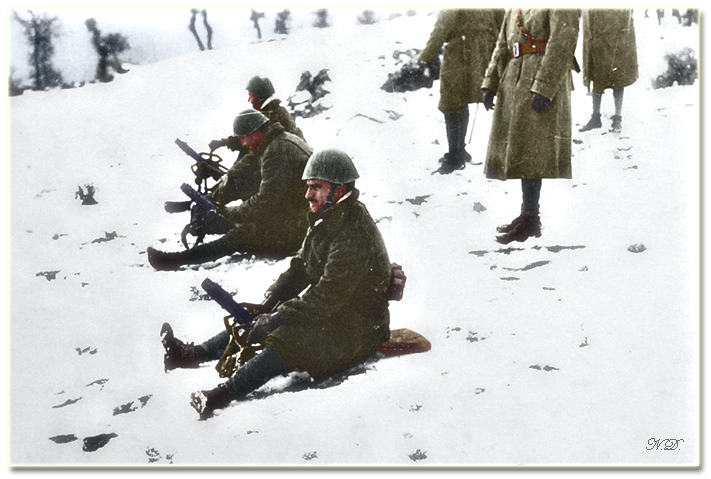
Sunday, 25 April 2010

(1946-1962) Centaur Mk.I

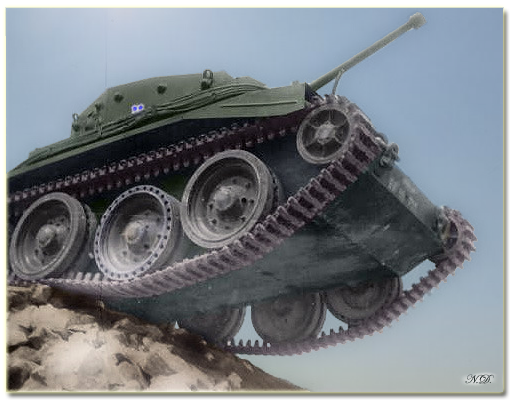
The original caption of this photo reads: 'Demonstration of the Centaur capabilities to the citizens of Amyndaion' (1957)The first tank that the Greek army acquired after World War 2 was the Centaur Mk.I. In May 1946, 52 such tanks were offered from Britain to the Greek government as part of the British commitment to help fight the communists during the Greek Civil War. For over two years, these tanks remained inactive as their crew were being trained and waiting for British technical support. They became operational in the summer of 1948.

The Greek Centaurs had considerable differences between them. For example, some had a 57 mm 6pdr quick firing Mk.V gun, some had different (type A or B) hulls and some were fitted with a Browning M2 machine gun mounted on the turret for Anti-aircraft purposes. Some had the older Liberty engine.


Operational History
May 1946 - The Greek Government receives 52 British Centaur Mk.I tanks.
1947 - Greek officers sent to England to be trained on Centaurs.
1948 - The officers return from training and three regiments are formed (II, IX and XI). They play significant role in operations against the communists.
January 1949 - The three regiments are renamed as 381, 382 and 383.
October 1949 - They form 391 "Kentavros" (Centaur) Regiment
1962 - Phased out. Gradually replaced by the newer M-47 Patton tank.


Specifications
A27L Centaur Mk.I

Crew: 5 Turret of a Centaur, from the National War Museum, Athens, Greece
Weight: 27.5 tons
Length: 20 ft 10 in
Width: 9 ft 6 in
Height: 8 ft 2 in
Engine: Liberty 395 hp
Speed: 27 m/h
Armour: 20/76 mm
Armament: 1x 6-pdr (57mm) main gun with 64 rounds and 1x 7.92mm Besa MG


For gamers and game designers
Centaur MkI tanks were used only for training in the British Army. In the Greek army, they faced only the significantly inferior Communist forces during the Civil War.


For modellers
Centaur MkI Greek (profile)


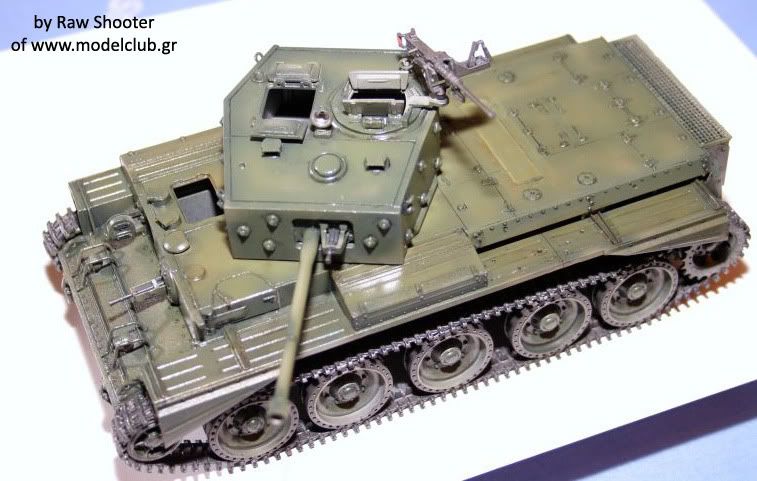
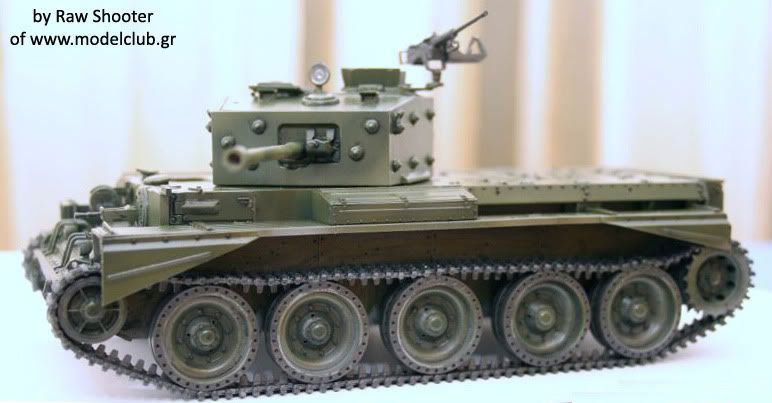
1:35 model of the Centaur by Raw Shooter of www.modelclub.gr:
Centaur 1:35 top view Centaur 1:35 side view
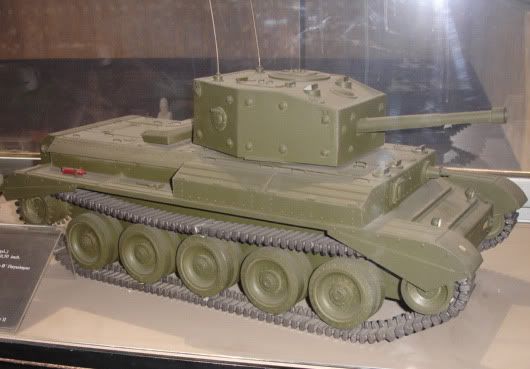
A scale model from the National War Museum, Athens:
Centaur scale model from the National War Museum, Athens

Saturday, 3 April 2010

(1927-1940) Submarine Y-3 "Proteus"

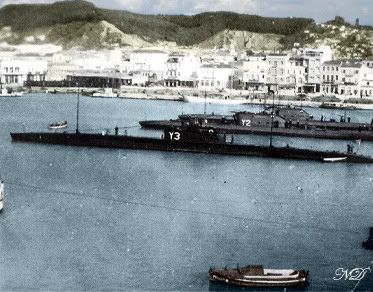
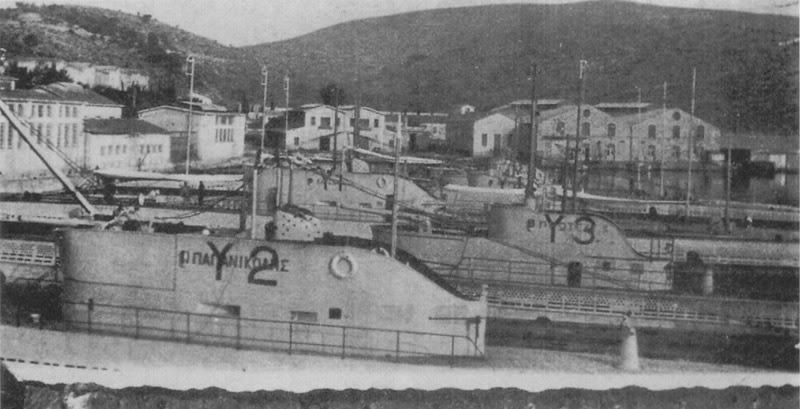
Y-3 Proteus next to Y-2 PapanikolisA Loire-Simonot type submarine, similar to the earlier Katsonis class, Y-3 Proteus was the first Greek submarine to be lost in World War 2. It was built in Nantes, at the At. and Ch. De La Loire, at a cost of 119,000 francs for the Greeks.
Having sunk early, Proteus was the only submarine of her class that didn't serve under the control of the Royal Navy during the war.


Y-3 Proteus - location of sinking

Operational History

24 Oct. 1927 - Launched
31 Aug 1929 - Commissioned.
30 Oct. 1940 - 5 Nov. 1940 - First patrol. Patraikos Gulf. 152 hours (56 subm./96 surf.)
15 Nov. 1940 - 24 Nov. 1940 - Second patrol. Adriatic. 214 hours (98 Subm./116 surf.)
25 Dec. 1940 - 29 Dec. 1940 - Third patrol. Adriatic. 51 hours (20 Subm./31 surf.)
19 Dec. 1940 - Locates Italian convoy. Torpedoes and sinks Italian cargo ship "Sardegna" (11,452 GRT). Very quickly, Proteus is spotted by the Italian Y-3 Proteus next to Y-2 Papanikolis in Salaminatorpedoboat Antares. Antares drops 11 depth charges on Proteus, forces it to surface and rams it 40 miles East of Brindisi (40º31'N, 19º02'E). All hands lost.
10 Jan. 1941 - At 09:25, the Italian radio announces that a Greek submarine was sunk three weeks ago. On 19 Dec. 1940 Greek steamboat "Ionia" had intercepted the SSS distess signal of "Sardegna". As a result the Greeks were aware of the success of Proteus, but not of its fate until the Italian radio announcement.


Specifications
Y-3 ProteusY-3 Proteus submarine of the Proteus class

Displacement: Surfaced 750 tons, Submerged 960 tons
Length: 68.6 m
Beam: 5.73 m
Draft: 4.18 m
Propulsion: 2-shaft Sulzer diesels plus 2 electric motors, 1420bhp/1200shp
Complement: 41 - 45
Max. Dive: 80 m
Speed: (Surf.) 14 knots, (Subm.) 9.5 knots
Range: (Surf.) 4,000 nm @ 10 knots, (Subm.) 100 nm @ 5 knots
Armament: 100mm gun at the forward end of the conning tower, at casing level (150 shells). No external tubes. 8x 533mm torpedo tubes (6 bow, 2 stern; 8 torpedoes)

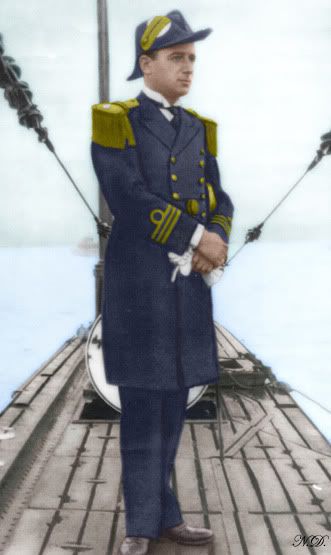
The crew, when sunk Captain of Y-3, Michail Chatzikonstantis (colourised photo)
Michail Chatzikonstantis (top photo - Born 1906, Piraeus, father: Antonios)

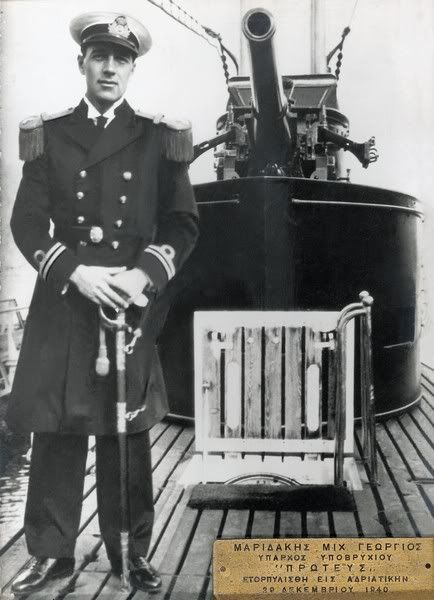
Georgios Maridakis (second photo - Born 1910, Chania)

Andreas Tournas (third photo - Born 1912, Tripoli, father: Konstantinos)

Theodoros Konidis (bottom photo - Born 1913, Konstantinoi Messinias, father: Antonios)

Kyriakos Nikolarakos
Dionysios Tilemaxos
Antonios Kafetzis
Ioannis Kyriazis
Thrasyvoulos Tsatsas
Anastasios Ntontos Officer of Y-3, Georgios Maridakis
Vasilios Georgiou
Achilleus Toulis
Theodoros Sanoudos
Dimitrios Giannelis
Anastasios Anastasopoulos
Georgios Tsalikis
Panagiotis Sklavos
Ilias Katsouranis
Napoleon Anthis
Dionysios Anninos
Nikolaos Armenis
Spyridonas Vlachos
Pantelis Voutsinas
Spyridon Gialypsos
Stamatios Giatrakos
Charalampos Delis
Konstantinos Dimitrakopoulos Officer of Y-3, Andreas Tournas
Christos Zafiris
Panagiotis Theodosis
Georgios Kapsos
Emmanuil Levantis
Georgios Liatsis
Panagiotis Minas
Georgios Morianos
Stavros Mousoulis
Dimitrios Orfanios
Zacharias Pantaleon
Michail Panagis
Panagiotis Parasxis
Eleftherios Perdikouris
Apostolos Skarakis
Georgios Tilemaxos
Aristidis Tousas
Panagiotis Fourikis Captain of Y-3, Theodoros Konidis
Petros Chatzidimitriou
Konstantinos Cheliotis
Georgios Chrysanthopoulos
Petros Psyllas


For gamers and game designers
In 1940, Proteus was already an aged submarine. On paper, it was marginally better than Papanikolis and Katsonis.


For modellers
Proteus has been included in the Axis & Allies Naval Miniatures game (1:1800 scale). It comes originally in light grey colour. The photo below shows my repainted black Proteus.
My repainted Proteus from the Axis & Allies Naval Miniatures game (1:1800 scale)

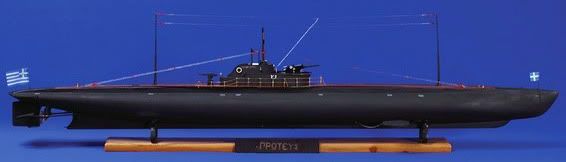
The photo below is from the Hellenic Maritime Museum in Athens.


Y-3 Proteus model from the Hellenic Maritime Museum in Greece

Sunday, 18 October 2009

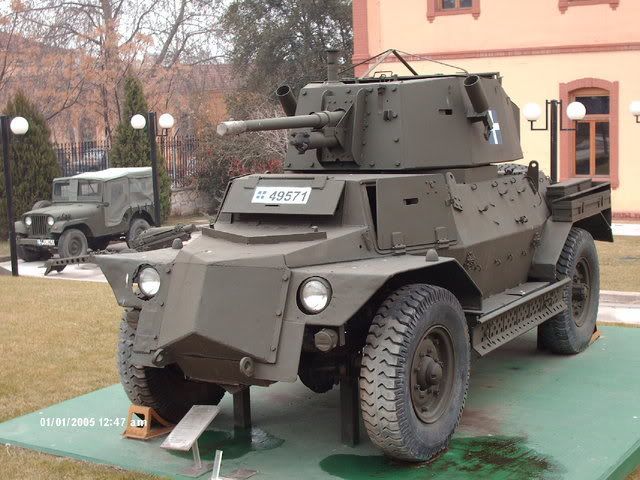
(1940-1990s) Marmon-Herrington

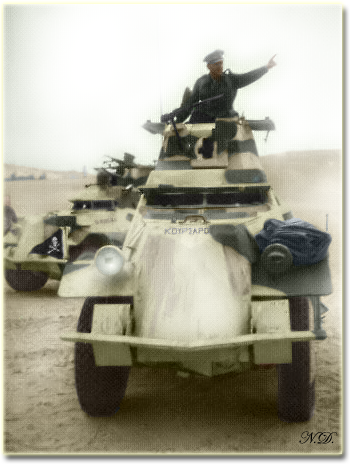
Greek Marmon-Herrington Mk.III in North Africa. The specific one's name is 'Koursaros', which means 'Corsair'The Greeks were given a small number of Marmon-Herrington I armoured cars that participated in the defence against the Germans. Later, the Greek army in the Middle East received two Marmon-Herrington III armoured cars, and several more, of the IVf type, after the liberation in 1944. IV was a complete redesign. It had a monocoque hull, had its engine mounted at the rear, not the front, and had a larger, two-man, turret, in place of the original one-man turret. Some IVfs remained in service until the 1990s.

I recorded this video during the Bovington Tank Fest of June 27, 2010. It's a Marmon Herrington IV which was given to Greece after World War II, probably during the Civil War:


Operational History

1945-1949 - During the Greek civil war, IVF armoured cars have their mechanical parts removed and are placed on flat wagons to protect trains.
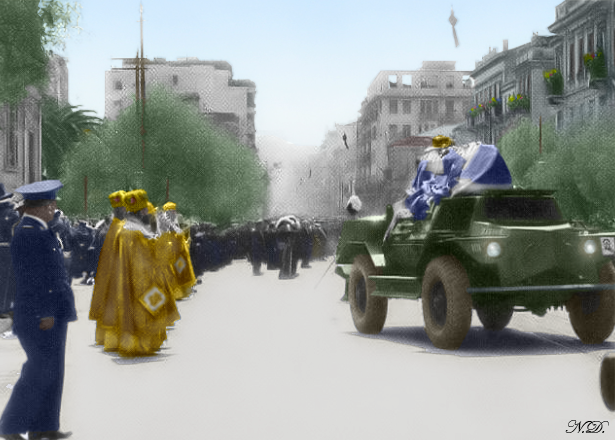
Marmon-Herrington IVF carrying the body of King George II (April 1947)1974 - At the time of the Turkish invasion of Cyprus, the Cypriot army has 45 Marmon Herringtons.
1990s - The Greek army is still using Marmon Herringtons in mechanised infantry battalions in the Aegean Islands.


Specifications
Marmon Herrington Mk.II/III armoured car
Crew: 4
Weight: 6 tons
Length: 5.31 m
Height: 2.49 m
Width: (II) 1.98m / (III) 2.29 m
Armour: 12 mm
Engine: 8-cylinder Ford petrol. 85 hp
Speed: 80 km/h
Operational Range: (on-road) 322 km, (off-road 193 km)
Armament: 1x 0.55" Boys Anti Tank rifle, 1x 7.92mm Bren MG, 1x 7.7mm vickers AA MG

Marmon Herrington Mk.IVF armoured car
Crew: 4
Weight: 6.4 tonnes
Marmon-Herrington IV outside the War Museum of ThessalonikiLength: 5.51 m
Height: 2.29 m
Width: 1.83 m
Armour: 20 mm
Engine: 8-cylinder Ford V90 petrol. 95 hp (71 kW), 3600 rpm
Speed: 80 km/h
Operational Range: (on-road) 322 km, (off-road 193 km)
Armament: 1x 40mm QF 2-pdr, 2x 7.92mm Browning MG

For gamers and game designers
Being one of their few modern armoured vehicles, the Marmon Herrington was invaluable to the Greek forces.

For modellers


A Marmon-Herrington IV from the Army's Grove in Goudi, Athens. Photos by Xristos of modelclub.gr:
Marmon-Herrington IV from the Army's Grove in Goudi, Athens

A scale model of the Marmon-Herrington from the War Museum in Athens.

Marmon-Herrington scale model

Sunday, 9 August 2009

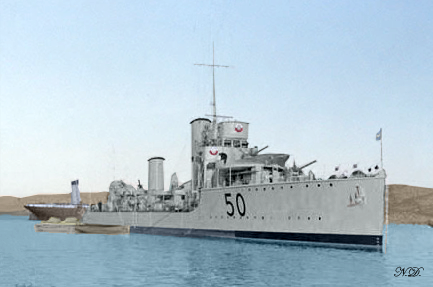
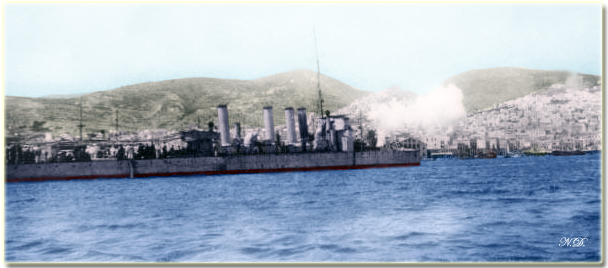
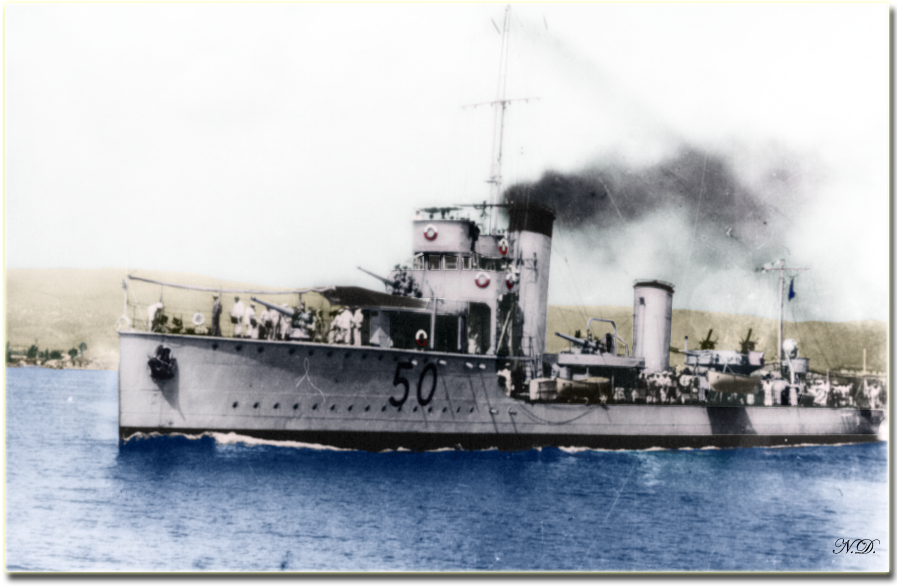
(1912-1941) Destroyer "Leon II"

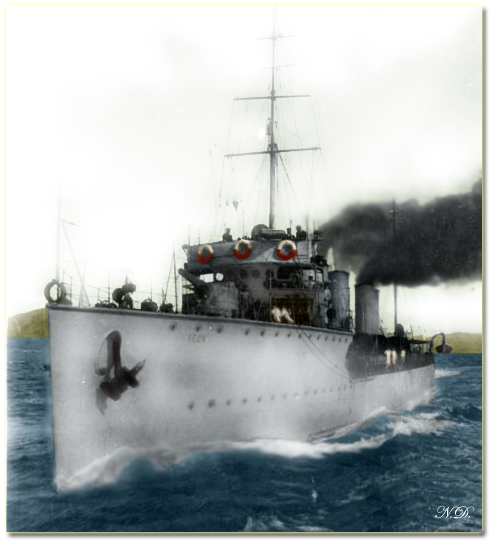
Destroyer Leon II probably near Skaramanga, post-refit.Leon II was one of four Wild Beast class destroyers built in the Camell Laird shipyards in Liverpool. They were originally intended for Argentina, but they were bought by Greece for £148,000 each. For the Balkan Wars, these ships were not given torpedoes and were considered scouts rather than destroyers, because the Royal Hellenic Navy had purchased only minimum ammunitions; 3,000 torpedoes for the whole of the fleet. Leon had a lot of bad luck and no major achievements during the wars that it participated in.


Operational History
19 Sep. 1912 - Commissioned in the Royal Hellenic Navy. It will soon participate in the Balkan wars under Lieutenant Commander J. Razikotsikas, while also on board is Squadron Commander D. Papachristos.
Oct. 1916 - Seized by the French. Participates in World War I on their side.
Destroyer Leon II1918 - Returns to escort duty under Greek colours and in the blockades of the coasts of the Black Sea from the Bosphorus to Trebizond.
22 Dec. 1921 - While moored with Ierax in Piraeus harbour, they are both severely damaged by the explosion of a depth charge bomb which the crew of Leon was transporting. Two officers, one petty officer and two sailors are killed on Leon and two sailors on Ierax. Leon completely loses her aft section up to her stern gun.
1925-27 - Undergoes refurbishment.
Destroyer Leon II after its 1925 refit1 March 1935 - During the failed coup attempt of 1935, Leon is briefly captured by the venizelists.
1940 - Leon is commanded by Petros Protopapas during World War 2.
18 April 1941 - During a convoy escort, she collides with passenger ship Ardena and two depth charges explode. As a result, the stern section is cut off and two officers get killed.
15 May 1941 - Sunk by German bombers in Souda Bay (Crete) where she was towed from Salamis Naval Base.


Specifications
Destroyer Leon IIWild-beast class destroyer "Leon" II

Displacement: (Standard) 880 tons
Length: 89.4 m
Beam: 8.3 m
Draft: 3 m
Range: 530 m
Speed: (before 1925) 31 knots, (from 1925) 32 knots
Complement: 58
Armament: (as completed) 4× Bethlehem 102 mm, 1× 75 mm AA, 6× 533 mm T.T., 3× electric search lights
(from 1925) 75 mm AA removed, 37 mm AA added, four-barrel 40 mm added, 2 mortars added, modified for laying 40 mines

For modellers
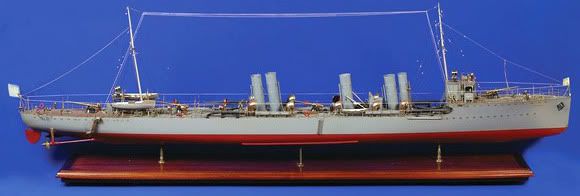
Destroyer Leon II - scale model from the National Maritime MuseumThe ship differs significantly before and after its 1925 refit. This scale model represents the pre-1925 version with the five funnels.


For gamers and game designers
Notice that Leon II has no torpedoes during the Balkan wars and can act only as scout. In later years it acts as proper destroyer with torpedoes, depth charges, etc.


Saturday, 11 July 2009

(1931-1936) MS.230

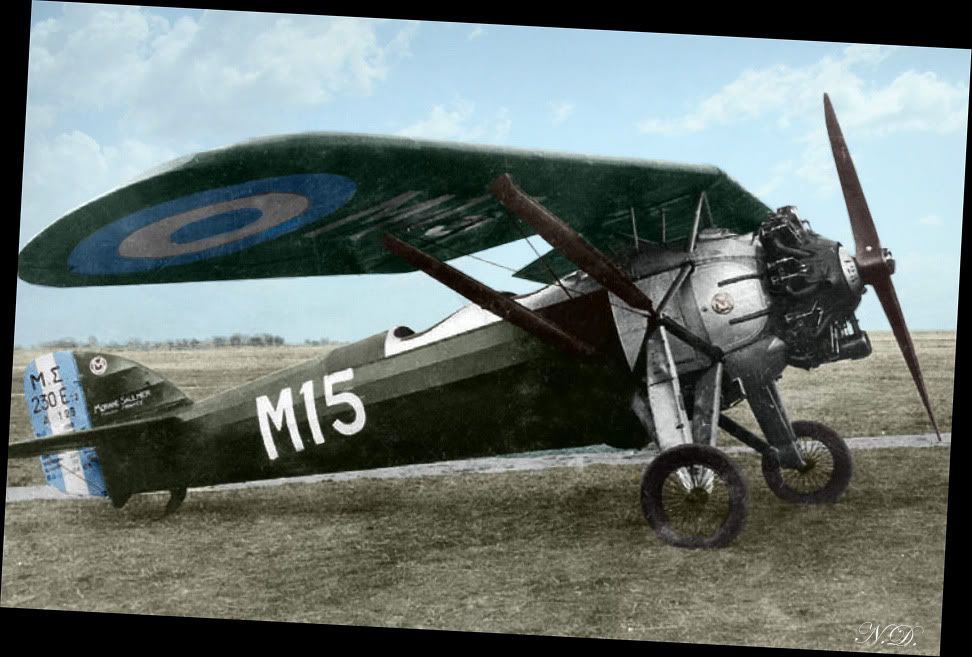
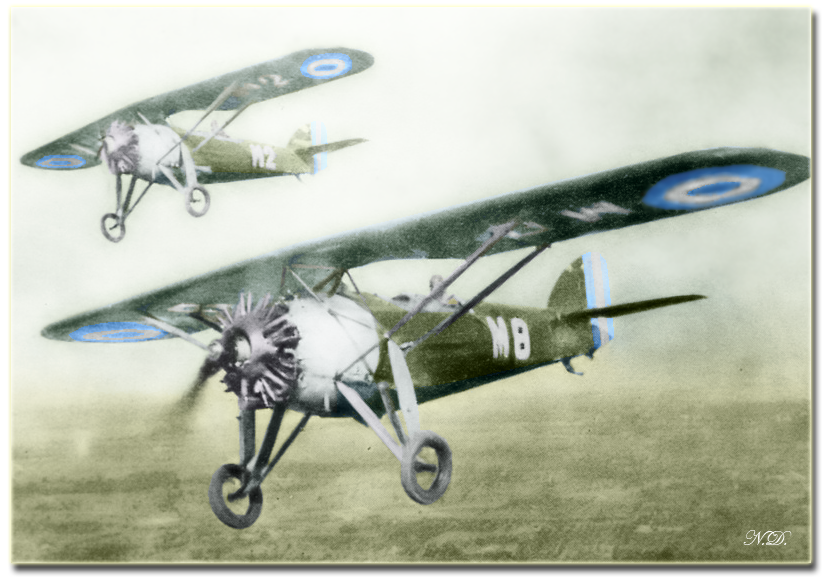
MS.230Between 1931 and 1936, Greece used the French Morane Saulnier MS.230 aircraft as elementary trainers in the Air Force. They were a brand new design at the time, the French equivalent of the iconic Boeing Stearman of the Americans and Tiger Moth of the British.

Operational History
October 1930 - Greece orders 18 MS.230 aircraft from France.
1931 - Delivered.
1936 - Removed from service as training aircraft and used only for maintenance flights until the beginning of World War 2. According to some sources, a small number were used for reconnaissance until 1941.

Specifications
MS.230 ET2 trainer

Crew: 2 (instructor and student)
Engine: Salmson 9AB, 9-cylinder, air-cooled radial engine, 109 kW (230 hp)
Weight: (Takeoff) 1,160 kg, (Empty) 832.35 kg MS230s in flight
Height: 2.98 m
Length: 6.93 m
Wingspan: 10.72 m
Speed: 204 km/h
Range: 560 km
Ceiling: 5,000 m
Armament: none


For gamers and game designers
This aircraft has little gaming value. It's just a trainer. Relatively modern for its time, but still only an elementary trainer.

Thursday, 18 June 2009

(1886-1901) Nordenfelt I

Not many know that Greece was among the first nations that acquired a submarine, as early as 1886. Nordenfelt I in trials in Landskrona, Sweden (September 1885). The flag is the swedish one.Thorsten Nordenfelt, a Swedish inventor and industrialist that had become rich with his machine gun design, headhunted English submarine pioneer George Garrett to build Nordenfelt I. This quickly proved an unsatisfactory design, difficult to control and unable to stay underwater for more than five minutes. It was fitted with one whitehead torpedo that was held in an external tube. Surprisingly, it was the first time that a submarine was fitted with the very successful whitehead torpedo. However, there is no record of a torpedo being fired by Nordenfelt I, not even in trials. It was received with mixed feelings when it was officially demonstrated in 1885 and would possibly have remained unsold if Nordenfelt's agent in the Balkans wasn't that shady character, (later Sir) Basil Zacharoff, a Greek-French arms dealer and financier. He convinced the Greek government to pay £9,000 for this submarine that would give them the edge against the Turks. Zacharoff parodied as Bazarov in TintinThen, he convinced the Turks that they should buy two of these (Nordenfelt II and III) because the Greeks already had one, and finally he convinced the Russians to buy another two, because the Turks had two. Basil ZacharoffIn practice, the Greek Nordenfelt I was a complete waste of money that was left to rot for 15 years before it was scrapped. The Turkish and Russian Nordenfelts were not more successful. One of the Turkish ones sank when it attempted to fire a torpedo and one of the Russian ones sank on the way to Russia when it was purchased. From then on, the Greek government was very cautious with submarines and did not try to buy another one until 1911. Bazarov in Tintin ('Broken Ear')Zacharoff, on the other hand, had started his arms-dealing career that made him a multi-millionaire. In 1890 he was hired by Russian machine gun producer Maxim, and was buying shares of the company until he was able to tell his boss that he had become an equal shareholder. Later, he became the director of Vickers Munitions, one of the most successful companies in World War I, and also bought the Monte-Carlo casino. Zacharoff is often seen in popular culture. For example, in Tintin he is parodied as the weapons trader Basil Bazarov, who sells to both parties of a single conflict that he helps provoke.

Below, a page from The London Illustrated News showing a Greek squadron entering the Bay of Salamis in 1886. At the bottom right of the image, one can see the submarine.


Operational History
1882 - Laid down in Stockholm.Nordenfelt I in official demonstration in front of foreign dignitaries (September 1885, Landskrona, Sweden).
Sep. 1885 - Undergoes trials at Landskrona and later in the same month gives surface and submerged demonstrations in front of 39 dignitaries from the navies of several European powers, Japan and Mexico. Reports mention the Prince of Wales, the King and Queen of Denmark, and the Czarina among them.
1886 - Bought by Greece for £9,000 and renamed "Piraeus". It undergoes trials in Greece.
1901 - Stricken without having been used by the navy at all

SpecificationsThe steam engine of Nordenfelt I. Arranged according to the fireless locomotive principle
Nordenfelt I submarine "Piraeus"
Width: 3.66 m
Height: 3.35 m
Displacement: 60 tons
Crew: 3
Max. Depth: 50 ft (15 m)
Engine: 100 HP steam engine
Speed: (Surfaced) 9 knots. It would shut down its engine to submerge
Armament: 25.4 mm Nordenfelt cannon and one Whitehead torpedo

For gamers and game designers
The Nordefelt submarine is considered a complete failure. The Greeks never used it in action, possibly only as a training platform. While reasonably balanced when surfaced, it was extremely unstable when submerged. There is no record of Nordenfelt I firing a torpedo, but when one of the later Turkish Nordenfelts attempted to do so, it sank.

For modellers
A profile of the submarine:
Profile of Submarine I
The actual patent awarded to Nordenfelt for the submarine in 1882:
Patent page 1 Patent page 2 Patent page 3 Patent page 4 Patent page 5 Patent page 6

Wednesday, 10 June 2009

(1877-1949) Gras rifle

Guards of a Greek monastery in Mount Athos after having repelled Bulgarian invaders. Some are possibly monks and there is one Gendarme among them. The front row, from left to right, carry Gras rifle, Gras cavalry carbine, two Gras musketoons and Gras rifle, while all three at the back carry Gras rifles (photo taken in 1913)The Gras rifle is an example of military equipment that reached legendary status in Modern Greece. Despite the fact that it could fire only one shot at a time, its robustness and lethality made it a favourite weapon of guerilla fighters for 70 years, from the local revolts against the Ottoman Empire to the resistance against the Germans. In fact, the name "Grades" (Γκράδες) entered the Greek language to represent all kinds of rifles and was used in this manner until a few decades ago. The name "gradia" (γκραδιά) meant the shot of a Gras. Also, weak students and people that were not intelligent were often called "Grades" (Γκράδες). The colourised photo above shows guards of a Greek monastery in Mount Athos after having repelled Bulgarian invaders (1913). Some are possibly monks and there is one Gendarme among them. The front row, from left to right, carry Gras rifle, Gras cavalry carbine, two Gras musketoons and Gras rifle, while all three at the back carry Gras rifles.

The Gras is mentioned in numerous works of literature and in folk songs.

Operational History
1877 - Greece purchases about 60,000 Gras rifles from Steyr.
22 March 1886 - Last recorded order (1,000 Gras rifles). In total 129,000 have been bought since 1877 (118,000 infantry rifles, 6,000 artillery musketoons and 4,800 cavalry carbines).
24 Jul. 1923 - At the time of the Treaty of Lausanne, the Greeks have 77,000 Gras rifles & carbines, which corresponds to about 25% of the total number of rifles.
28 Oct. 1940 - At the time of the Italian invasion, the Greeks have 60,000 Gras rifles, which corresponds to about 13% of the total number of rifles.


Specifications Greek Gras infantry rifle, artillery musketoon and cavalry carbine
Greek Gras Mle 1874 infantry rifle

Weight: 4.2 kg
Length: 1.32 m
Barrel Length: 0.82 m
Caliber: 11 mm
Action: Bolt-action
Feed System: Single shot
Muzzle velocity: 450 m/sEvzone of the Royal Guard in ceremonial dress with a Gras infantry rifle (1914)

Greek Gras Mle 1874 artillery musketoon
Weight: 3.3 kg
Length: 0.99 m
Barrel Length: 0.49 m
Caliber: 11 mm
Action: Bolt-action
Feed System: Single shot
Muzzle velocity: 410 m/s

Greek Gras Mle 1874 cavalry carbine
Weight: 3.75 kg
Length: 1.171 m
Barrel Length: 0.72 m
Caliber: 11 mm
Action: Bolt-action
Feed System: Single shot
Muzzle velocity: 430 m/s


For gamers and game designers
At the time of its introduction, the gras was a very potent rifle. Later, it was considered too slow in comparison to more modern rifles. Still, although it could fire only one shot at a time, its 11mm caliber made it particularly lethal.


For modellers
Being a close ally of the French, Greece had tried to order Gras rifles from them, but at the time France was frantically re-arming as a result of the disastrous Franco-Prussian war and could not supply Greece. Then, the Greeks turned to Austrian Steyr for Gras rifles. The Gras rifles produced by Steyr for Greece were identical to the French Gras rifles, with the exception of the left receiver flat that is marked with Styer proofs and the left buttstock that carries a Greek cartouche. The rifle is chambered for the French Mle 1874 Gras cartridge.
The Gras Musketoons are a bit shorter than the rifles and the carbines are practically identical to the French Gras cavalry carbines, but with brass buttplate and barrel bands and turned down bolt handle.

Friday, 5 June 2009

(1938-1941) Dornier Do.22Kg

Do22. Hastily painted and pressed into service.The Do.22 was a German seaplane torpedo bomber that was never used by the Germans and never operated as a torpedo bomber; in fact it was not always a seaplane either. 12 were sold to Greece (Kg variant), 4 to Finland (Kl) and 12 to the Kingdom of Yugoslavia (Kj). In Greek service, they were first used in naval convoy escort, anti-submarine patrol, and naval reconnaissance missions, including searching for enemy minefields. Later, nine were fitted with conventional landing gear instead of sea-landing floating system, because the Greeks were desperately short of army cooperation aircraft. They were also expected to be used for night bombing missions against the Italian forces at Tepeleni, but only one such mission was carried out.

Operational History
1938 - 1939 - Greece receives her 12 Do.22.
December 1940 - January 1941 - 9 of the 12 aircraft are fitted with landing gear in Elefsis (KEA) and are assigned to the reconstituted 2nd Observation Squadron to be used in reconnaissance and night bombing missions.
Do22Kg hydroplanes carrying bombs
Apr. 1941 - All but one are destroyed (probably on the ground) by German air raids. A hydroplane escapes to Alexandria, where it serves under British command for a short period of time.


Specifications
Do22G light bomber/reconnaissance

Crew: 3, pilot, gunner and radio operator
Length: 13.12 m
Wingspan: 16.2 m
Height: 4.83 m
Wing Area: 45 m²
Do22Kg hydroplanes carrying bombs
Weight: Empty 2,545 kg, loaded 4,300 kg
Powerplant: 12cylinder Hispano - Suiza 12Y21 910 hp. 3-flap propeller with automatic pace modulator system
Speed: 355 km/h at 4,000 m, 280 km/h at sea level
Range: 6 hours, (with max. fuel) 1,600 km, (with max. payload) 800 km
Service ceiling: 9,500 m
Armament: front 1x FN-Browning 7,92 mm machine gun with French GSC synchronisation system, plus 1x same type machine gun at the gunner's position. Central bomb rail for 2 x 50 kg or 8 x 15 kg or 1 x 250 kg bomb payload of Greek contruction (American type).
Photographic Camera: F-50
Landing Gear: L Model
Radio: Telefunken 40/70
Oxygen Supply: Made in United States
Do22. Before delivery to the Greek airforce (1938)
Aiming Sight: Wimperis (made in United Kingdom)

For gamers and game designers
The Do.22s are relatively diverse aircraft that can be used for light bombing, convoy escort, night bombing and photographic reconnaissance


For modellers
The Greek Do.22 aircraft took the serial numbers N21 - N32. The ones that were converted with conventional undercarriage started from Σ81.

A model of the Greek Do.22Kg hydroplane variant made by Matt Bittner. The colour should tend more towards silver than grey, but still a great-looking model.
A model of the Greek Do.22Kg hydroplane variant made by Matt Bittner

The following are profiles from an unknown French book. The artist is Daniel Laurelut. The text reads: "Do 22Kg Greek 'N27' based in 12NMS at Paloukia. Like many of the Greek Do22, this one could also be used in land configuration, the undercarriage being interchangeable".

Do22 Kg profiles from a French book

From unknown French source, a profile of a Do.22Kg of 2nd Mira of land cooperation in March-April 1941.

Do22 Kg from March-April 1941