Saturday, 28 August 2010

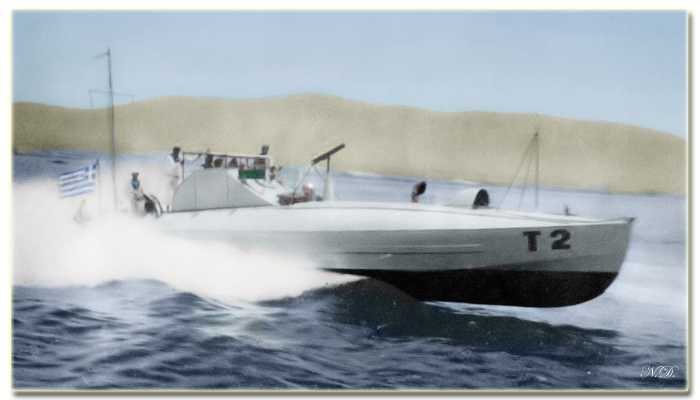
(1929-1941) Motor Torpedo Boats "T1" and "T2"

T-2Built by Thornycroft in 1929, T-1 and T-2 were the only motor torpedo boats that the Greeks had at the beginning of World War II. They carried no name but just the codes T-1 and T-2. Each boat's crew included two officers, two petty officers (both engineers) and two sailors (gunner, radioman).
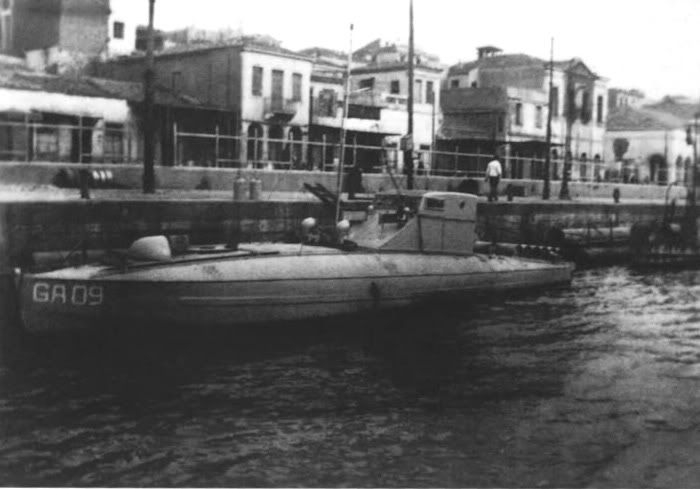
GA-09 in German serviceT1 and T2 did not see any significant action during the war, although they would certainly be useful against the Italians. They were used only in secondary roles. In 1941, they were sunk by German air raid in Salamis Naval Yard. The Germans repaired them and used them in the Aegean with slight modifications, renamed G-09 and G-10.

Interestingly, in 1939 the Greeks had ordered four newer motor torpedo boats from Vosper. These were never delivered due to the outbreak of the war. They were used by the British as MTB-218, 219, 220 and 221. Admiral Athanasios Spanidis on MTB-218 and 219 (translated from magazine "Ptisi" no143):
"In early February 1940, the Naval attaché in London informed me that I would be placed as commander of two new motor torpedo boats, being built in Portsmouth. The plan was to use them unarmed in peacetime against smuggling and armed with torpedoes in the case of war. When the war started, the English government informed the Greek that both boats should be delivered to the English Navy except if they were transfered from the Greek Ministry of Economy to the Hellenic Navy, in which case H.N. crew should be sent to receive them and not of the Ministry. During the negotiations, I studied the sailing characteristics of the boats. Towards the end of April, I went to Portsmouth to attend the final trials of the two motor torpedo boats... The news from Athens regarding the negotiations showed that they would probably be left to the English. For the record, the Greek Ministry of Economy considered it a success to receive 20,000 pounds in compensation for these ships and deny the Hellenic Navy from two capable boats. Judging by the war record with the English, I consider them as useful as our submarines in the Adriatic, with their great speed and their torpedo armament."

Operational History
1929 - Commissioned.
20 Apr. 1941 - Sunk, captured and modified lightly by the Germans

Specifications
Thornycroft 55ft CMB class Motor Torpedo Boats "T1" and "T2"

Displacement: 15 tons
Propulsion: 750 hp
Length: 16.5m
Width: 3.3m
Draft: 0.9m
Speed: 37 knots
Armament: 2 × TT 457mm (fired astern), 2 × Lewis MG, 2 depth charges
Crew: 6


For Gamers and Game designers
Although these two did not see significant action, similar torpedo boats were particularly successful for other nations, such as the British and the Italians. Notice the peculiarity of the torpedoes; they were fired astern.


For Modellers
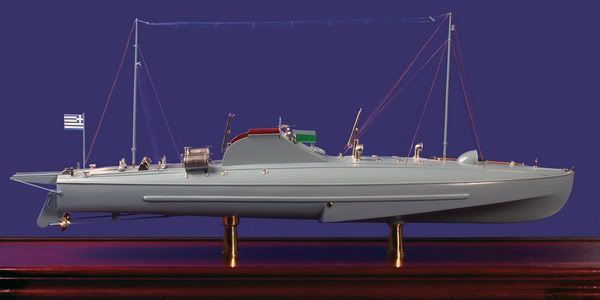
A model of T-1 from the Hellenic Maritime Museum:
Model of T-1 from the Hellenic Maritime Museum

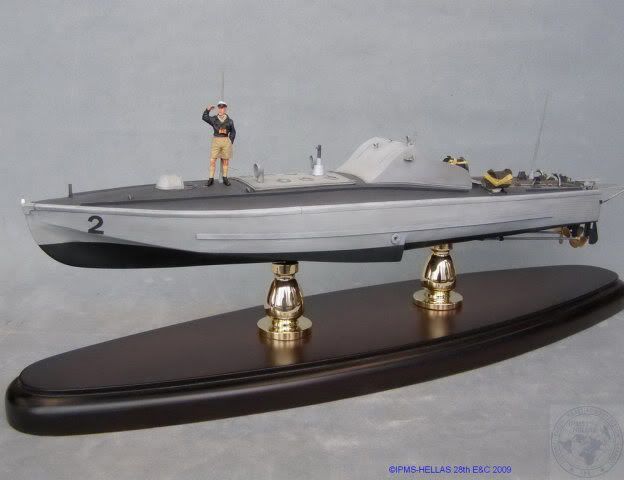
A recent model by Stavros Soulis that entered the IPMS-Hellas 2009 competition:
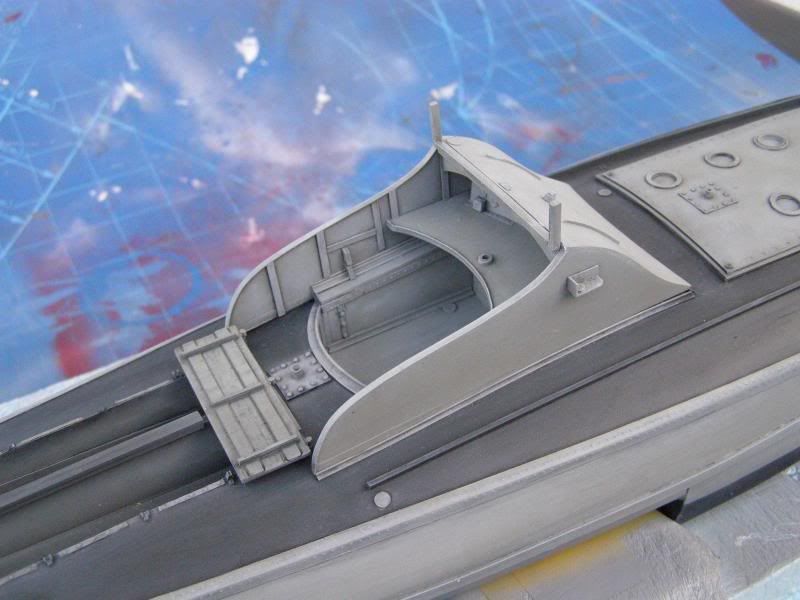
Model of Greek CMB by Stavros Soulis Model of Greek CMB by Stavros Soulis

Sunday, 30 May 2010

(1940-1941) Ski Troops

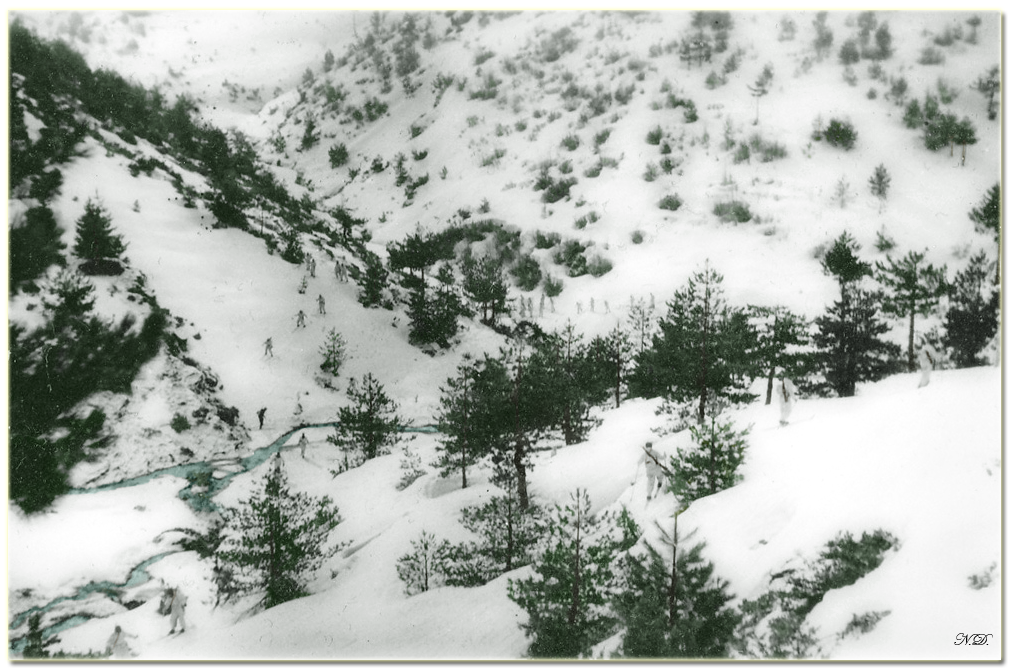
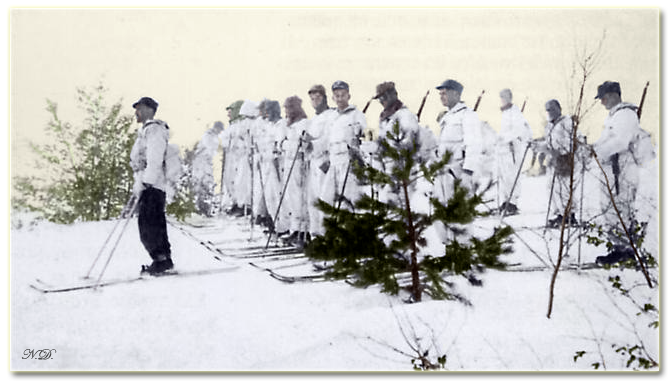
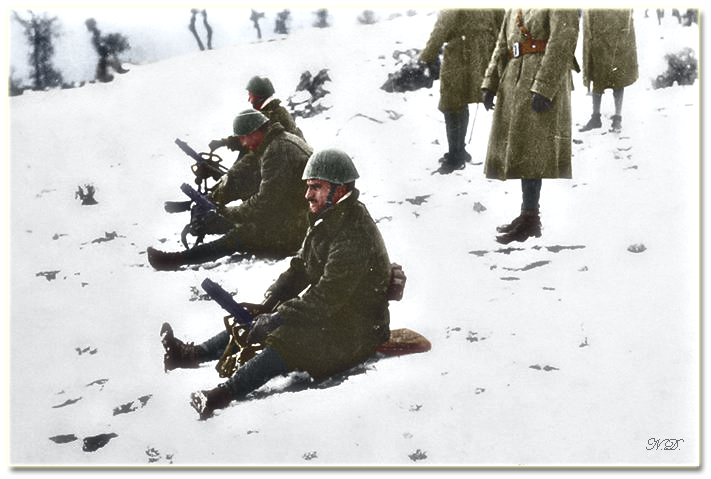
Greek Ski troops (1940-41)In November 1940, the Greek High Command ordered the formation of the 1st Ski Battalion for alpine raiding and reconnaissance. Here, we have the immense privilege of publishing an article written by Thanos Koutsikopoulos, who at the age of 96 is possibly the last surviving member of the 1st Ski Battalion:
________________________________________________
The Greek Ski Battalion (1940-41)

Skiing itself was introduced to Greece in 1930-31 by the Alpine Club and its branches in various towns. Before the war there were talks to introduce it in mountain villages to help the inhabitants. This is why a few days after the Italian invasion through Albania (28th October 1940), the army set up the original Ski Thanos Koutsikopoulos (August 2009, Newcastle, UK)Battalion made up of skiers from the Alpine Club who were either already serving in other units or were members of the Alpine Club who volunteered. 130 experienced skiers, bringing their own skis and ski boots, formed the first company which, after a short period of military training at Metsovo, were sent to the highest point of the front at Mount Kamia (Mnema tis Grias) which has an altitude of 2100 metres. For the 2nd and 3rd companies, five divisions from mountainous regions sent 50 soldiers (non-skiers) to be trained in skiing and alpine conditions by 6 men from the 1st company. Their skis were donated by the Alpine Club and individuals. Major Ioannis Paparrodou, himself a champion cross-country skier, was appointed as C.O. of the Battalion.

The men of the 1st company were equipped with sleeping bags and, instead of heavy military overcoats, with anoraks and trousers, white for camouflage. One of the army’s problems in the Albanian mountains was frostbite to the toes and heels, the men of the 1st company had no such problem, even though the men lived in the snow, because of the better equipment, training and experience in alpine conditions. Major Paparrodou’s plans for the immediate future were, until more experienced skiers were available, as well as a short period of ski-training, to introduce snow-shoes for the 2nd and 3rd companies. These did not need extensive training to use and provided better stability for carrying loads and weapons.

After the end of the war, when the army organised a directorate of “Special Forces”, including mountain units (LOK), General Kallinsky, their first organiser, asked for and was provided with, oral and written information from members of the former Ski Battalion.

A Modern King Leonidas

Major I Paparrodou became the Greek hero of the war. Like a modern King Leonidas he sacrificed himself fighting a motorised German column single-handedly. The Germans had invaded Greece through the unprotected Yugoslavian border to the rear of the Greek Forces and his personal sacrifice gave the Greek soldiers, withdrawing to a new line, time to avoid capture or worse. Hitler, praising the gallantry of the Greeks, ordered Greek soldiers not to be taken prisoner.

- Thanos Koutsikopoulos (First Company), August 2009

__________________________________________________

Operational History
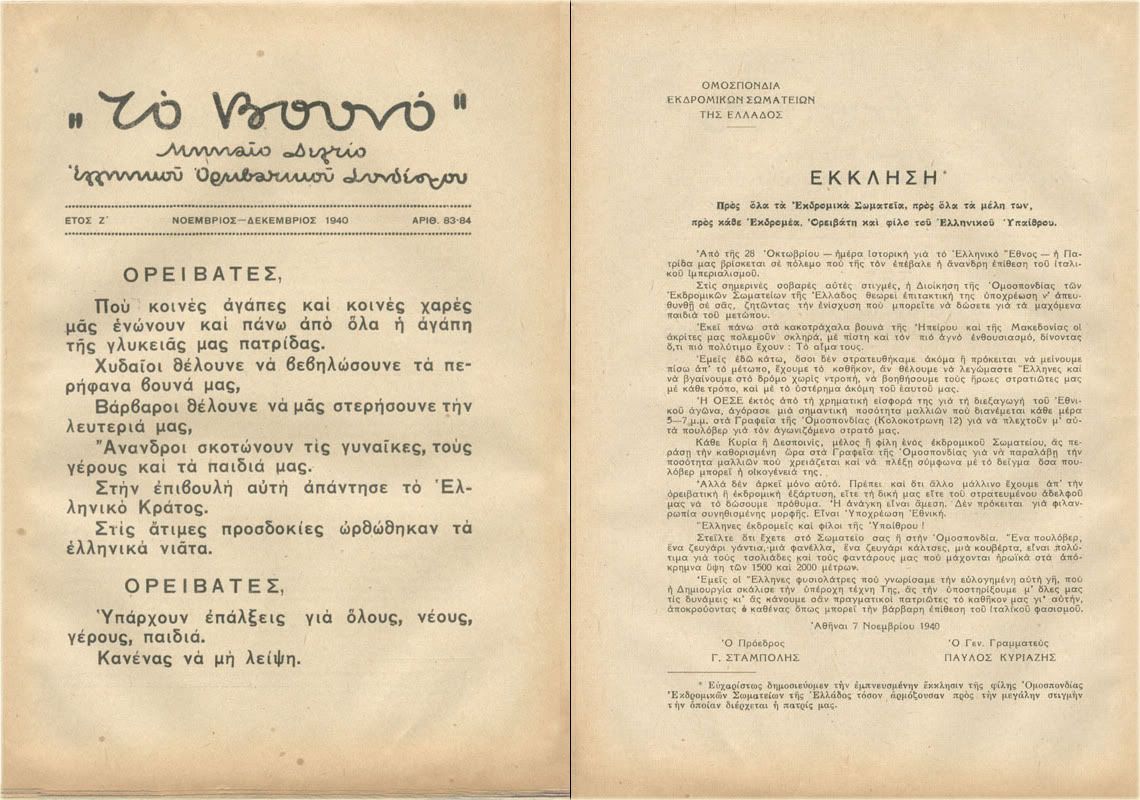
A call to the various mountaineering clubs to participate in the war effort (in Greek, Nov.-Dec. 1940)

Nov. 1940 - Ioannis Paparrodou forms the 1st Ski Battalion with personal invitations to members of mountaineering clubs. The clubs respond with the majority of eligible men enlisting and with all clubs' money and equipment offered to the army.
April 1941 - Greece falls to the Germans.
Greek Ski troops (1940-41)
Members

Paparrodou with his staff officers at the Battalion's Headquarters in Moschopol, Albania

Ioannis Paparrodou (Athens). Cross country skiing national champion, who became the first commander of the newly-formed 1st Ski Battalion. When the Germans invaded he was transferred to an artillery unit in Argos Orestikon. Having refused to surrender, he died fighting alone on a hill, surrounded by several German troops. The Germans burried him as a hero and his death became a legend. Today, the barracks of the Raider Forces in Olympos is named after him.
Angelos Angelousis (Serres): When he returned to his native Serres, he was exiled by the Bulgarians to Volos, where he took part in the "Apollon" resistance group. He fought against the communists during the civil war and later became member of the parliament and minister. He was exiled by the military Junta for 5 years and then resumed his political career until 1990.
Georgios Dimitriadis (Athens). Downhill national champion.
Thanos Koutsikopoulos (Athens). Cross country skier.
Emmanuel Bamieros Commander of the 1st company.
Konstantinos Talios (Thessaloniki). Commander of the 2nd company.
Giorgos Pappas (Volos). Champion from the Volos club. He was killed in action.
Plouton Loggidis (Volos). He was seriously wounded in action.
Aleksis Karrer. Communist journalist, who was sent to exile in 1947 and in 1967. He died in 2004.
Neilos Mastrantwnis "Klearxos". Resistance fighter (with EPON). Killed in Lamia, in 1 Sep. 1944.
Renos Frangoudis. Cypriot volunteer. Balkan champion in track & field.
Konstantinos Adamopoulos of Georgios (born 1919 in Smyrna – served as volunteer, survived the war. Died in 2007)< /br>Alexandros Vouksinos. The youngest (17 years).
Spyros Tsiklitiras (Patras). National champion in 200m breaststroke swimming. He also served in the navy. He was the nephew of Greek Olympic champion, K. Tsiklitiras. Also from the Patras club: Andreas Antonopoulos, Ioannis Tassopoulos, Vasilis Antonopoulos, Alekos Antonopoulos, Kostas Kaggelaris, Andreas Asimakopoulos

Saturday, 1 May 2010

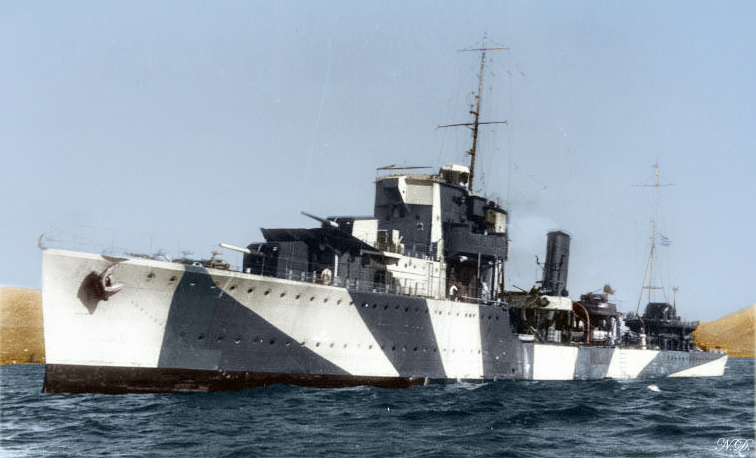
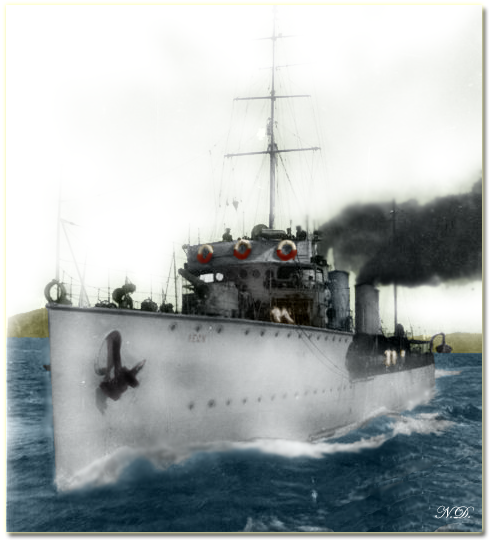
(1939-1943) Destroyer "Vasilissa Olga"

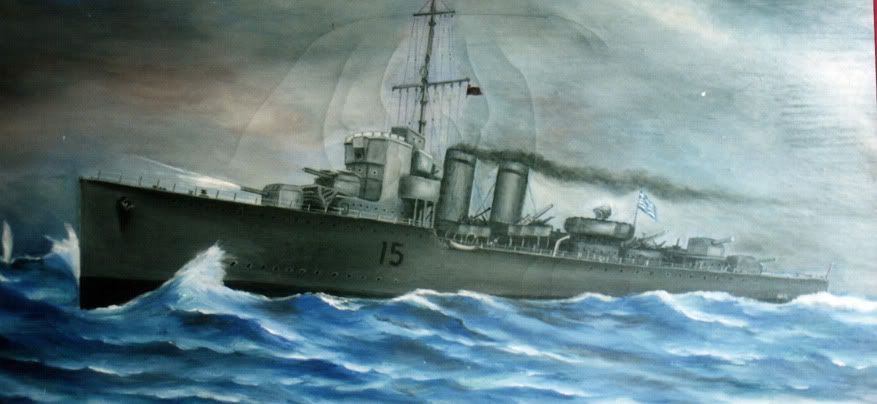
Destroyer Vasilissa Olga in pre-war disruptive camoA modified version of the British G-class of destroyers, Vasilissa Olga was the most modern ship of the Royal Hellenic Navy at the outbreak of World War 2. Together with her sister, Vasilefs Georgios, she was built by Yarrow, but was fitted with German-made 127mm (5 inch) guns and 37mm AA guns. The installation of the armament was carried out in Greece as the Germans refused to ship the weapons to Britain. Two further ships of the same class, the Vasilefs Konstantinos and Vasilissa Sofia, were to be built in Greece, but construction halted due to the outbreak of the Second World War.

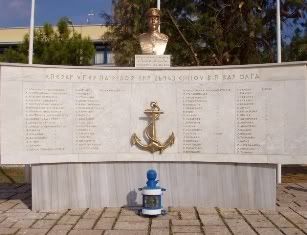
Until September 1943, when she was sunk by German bombers, The momument erected in Laki, Leros.Vasilissa Olga had distinguished herself as the most successful Greek ship in the war. Ironically, before she was sunk, she was known as the phantom ship of the Mediterranean destroyer flotillas, because of the several times she had escaped damage. A monument has been erected in Leros in honour of the ship.

You can watch a documentary (in Greek) of Vasilissa Olga from the Ert.gr archives.

Operational History
8 Vasilissa Olga in trials, 1937 (painting by V. Germenis)Feb. 1937 - Laid down (Yarrow Shipbuilders Ltd., Scotstoun, Scotland).
2 Jun 1938 - Launched.
14 Feb 1939 - Commissioned. Under Captain Zarokostas she sails towards Salamina, Greece, where she arrives on the 1st of March 1939. She will participate in several missions until 1943 in convoy escort duty.
15 Aug. 1940 - Sails to Tinos to escort the pilgrims
14 - 15 Nov. 1940 - Participates in the 1st Otranto Straight raid
4 - 5 Jan. 1941 - Participates in the 3rd Otranto Straight raid
Feb 1941 - With defeat against the Germans seeming imminent, Vasilissa Olga carries the gold from the Bank of Greece to the island of Crete.
25 April 1941 - Cmdr Georgios BlessasThree days before Greece falls to the Germans, Vasilissa Olga escapes to Alexandria, where she is assigned pennant number H 86 by the British. New captain is Georgios Blessas (photo).
Nov. - Dec. 1941 - Undergoes modernisation in Calcutta and returns to active duty in the Mediterranean Sea.
Feb. 1942 - Back in the Mediterranean. Joins a British squadron and participates in the Tobruk operations
26 Mar. 1942 - Picks up 20 survivors from the British tanker RFA Slavol that was torpedoed and sunk by the German submarine U-205 off Sidi Barrani, Egypt.
10 Jun. 1942 - Picks up 53 men from the British tanker RFA Brambleleaf that was torpedoed and damaged by the German submarine U-559 off Ras Alem, Egypt.
15 Dec. 1942 - Together with the British destroyer HMS Petard, Vasilissa Olga sinks the Italian Adua-class submarine Uarsciek (620 tons) south off Malta.
19 Jan. 1943 - Together with the British destroyers HMS Pakenham and HMS Nubian, Vasilissa Olga sinks the German transport ship Stromboli (475 tons) off the Libyan coast.Italian torpedo boat Castore
2 Jun. 1943 - Together with the British destroyer HMS Jervis, Vasilissa Olga opens fire from 2km against the Italian Spica-class torpedo boat Castore (652 tons, see photo) and the Italian merchant ships Postumia (595 GRT) and Vragnizza (1592 GRT). Castore was sunk (at 03:15), while Postumia and Vragnizza were damaged. According to the war diaries of the Seekriegsleitung, both merchant vessels are reported to have arrived in Messina at 1630 hours on 3 June. Other sources give that Postumia went ashore and was later raised and repaired.
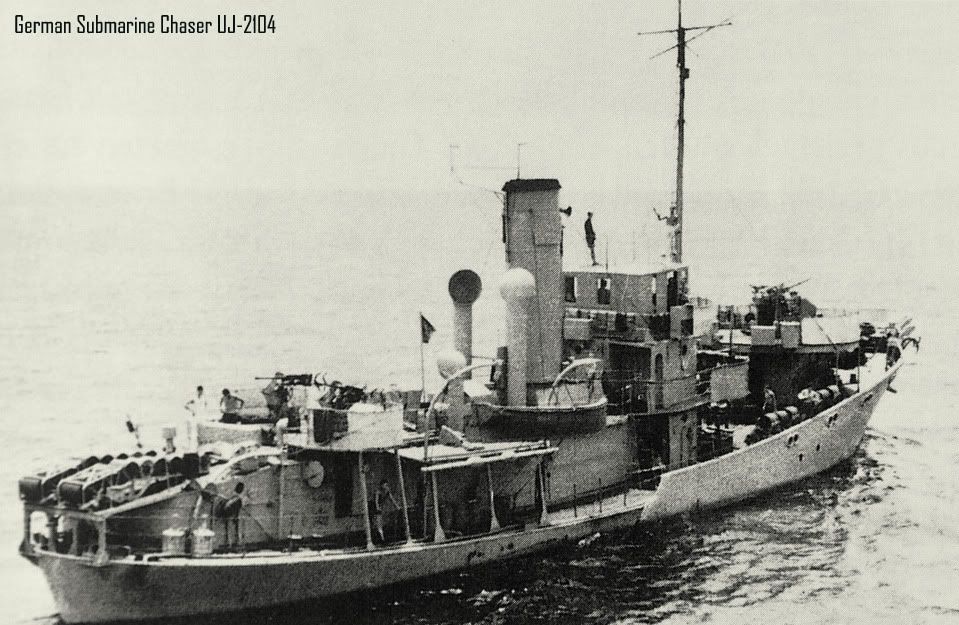
10 Sep. 1943 - As a recognition of the Greek Navy's contribution to the war, Vasilissa Olga leads the Allied fleet (HMS Warspite, HMS Valliant, HMS Faulknor, HMS Fury, HMS Echo, HMS Intrepid, HMS Raider, Le Terrible) that receives the surrendering German submarine chaser UJ 2104. Photo from Peter Schenks´ book 'Kampf um die Ägäis', page 39.Italian fleet.
17 Sep. 1943 - Together with British destroyers HMS Faulknor and Eclipse, she sinks a German convoy, consisting of the transport ships Pluto (2,000 tons), Paolo (4,000 tons) and the German submarine chaser UJ 2104 (see photo), near Astypalea.
Sep. 1943 - During the Battle of Leros, she transports members of the Long Range Desert Group to the island. Vasilissa Olga sinking
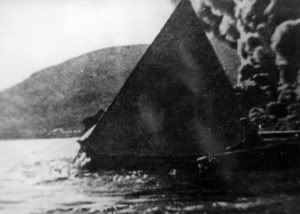
26 Sep. 1943 - Lost to an attack of 25 Ju-88 bomber aircraft while anchored in Lakki Bay, Leros. Cmdr Blessas, 6 officers and 65 other members of the crew perished with the ship. Cmdr Blessas was the first to fall during the attack. During the final moments of the ship, just before it disappears, someone cries "Zito i Olga" (Hail, Olga). All surviving members of the crew repeat it.

Specifications
Modified G-class destroyer "Vasilissa Olga"
Displacement: (Standard) 1,414 tons
Length: 98 m
Beam: 10.2 m
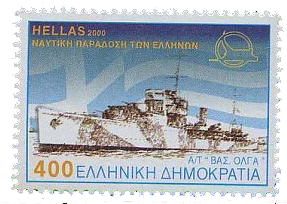
Destroyer Vasilissa Olga on a stampDraft: 2.59 m
Range: 4,800 nautical miles (8,890 km) at 19 knots (35 km/h)
Speed: 36 knots
Engine: 3 Admiralty 3-Drum Type Boilers, 2 Parsons Geared Turbines, 34,000 HP
Complement: 145
Armament: (original) 4×5 in, 4×37 mm A/A, 2×4 21 in T/T
(after 1941 refit) 4×5 in, 1×4 21 in T/T, 1×3 in A/A, 6×20 mm A/A, A/S device added

For gamers and game designersAs the most modern and Destroyer Vasilissa Olga paintingmost successful Greek ship in World War 2, Vasilissa Olga has a special place in Hellenic Navy wargaming. Notice that after the 1941 refit, four torpedo tubes were removed, but she was improved considerably in terms of Anti-aircraft and Anti-submarine capabilities.

For modellers
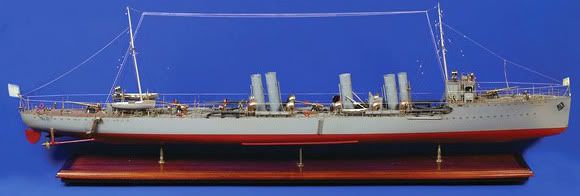
Destroyer Vasilissa Olga - scale model from the National Maritime Museum Destroyer Vasilissa Olga - scale model from the National Maritime Museum
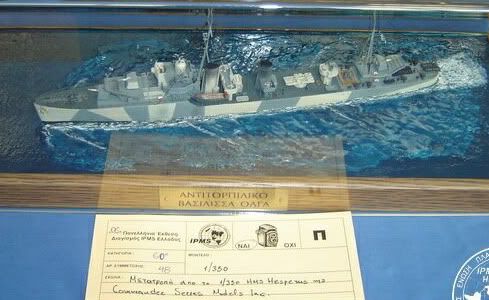
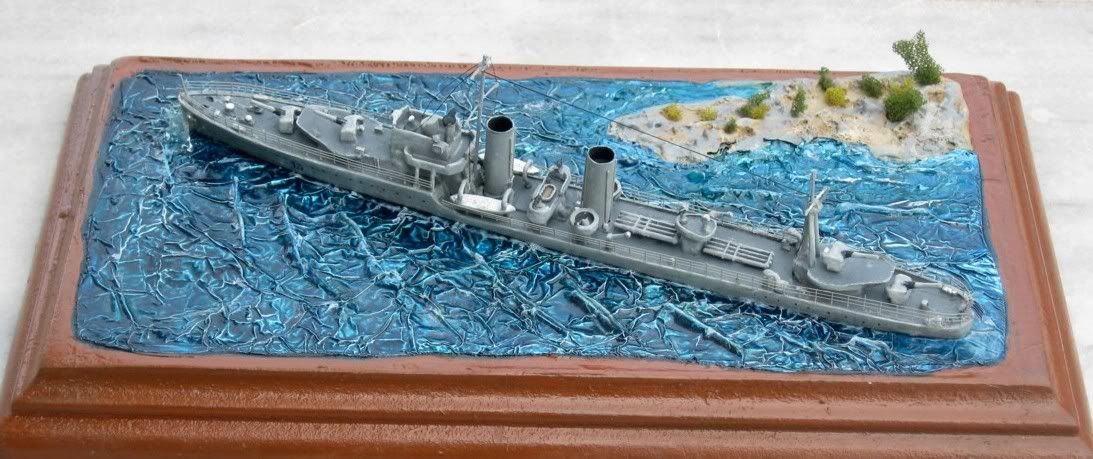
The ship's camo differed a lot before and during the war, depending on the season and the area where it operated. It is very difficult to find reliable details. There are two scale models of the ship in the Hellenic Maritime Museum. Vasilissa Olga has also appeared in 1/1800 in the Axis & Allies Naval Miniatures game. The model below is from IPMS Hellas 2007:
Destroyer Vasilissa Olga - scale model from IPMS Hellas 2007
One more below by D. Georgiadis:
Destroyer Vasilissa Olga - scale model by D. Georgiadis

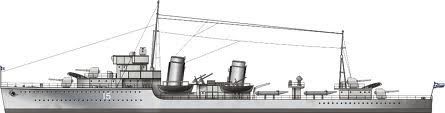
And a profile from unknown source:

Sunday, 25 April 2010

(1946-1962) Centaur Mk.I

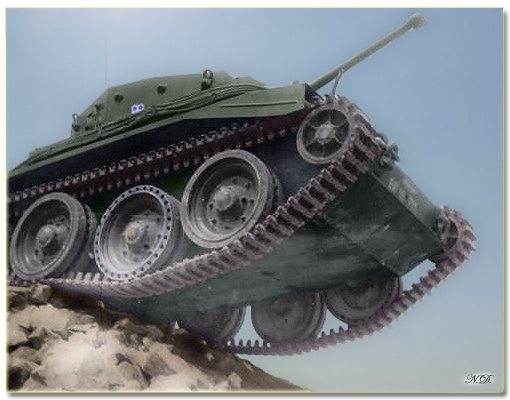
The original caption of this photo reads: 'Demonstration of the Centaur capabilities to the citizens of Amyndaion' (1957)The first tank that the Greek army acquired after World War 2 was the Centaur Mk.I. In May 1946, 52 such tanks were offered from Britain to the Greek government as part of the British commitment to help fight the communists during the Greek Civil War. For over two years, these tanks remained inactive as their crew were being trained and waiting for British technical support. They became operational in the summer of 1948.

The Greek Centaurs had considerable differences between them. For example, some had a 57 mm 6pdr quick firing Mk.V gun, some had different (type A or B) hulls and some were fitted with a Browning M2 machine gun mounted on the turret for Anti-aircraft purposes. Some had the older Liberty engine.


Operational History
May 1946 - The Greek Government receives 52 British Centaur Mk.I tanks.
1947 - Greek officers sent to England to be trained on Centaurs.
1948 - The officers return from training and three regiments are formed (II, IX and XI). They play significant role in operations against the communists.
January 1949 - The three regiments are renamed as 381, 382 and 383.
October 1949 - They form 391 "Kentavros" (Centaur) Regiment
1962 - Phased out. Gradually replaced by the newer M-47 Patton tank.


Specifications
A27L Centaur Mk.I

Crew: 5 Turret of a Centaur, from the National War Museum, Athens, Greece
Weight: 27.5 tons
Length: 20 ft 10 in
Width: 9 ft 6 in
Height: 8 ft 2 in
Engine: Liberty 395 hp
Speed: 27 m/h
Armour: 20/76 mm
Armament: 1x 6-pdr (57mm) main gun with 64 rounds and 1x 7.92mm Besa MG


For gamers and game designers
Centaur MkI tanks were used only for training in the British Army. In the Greek army, they faced only the significantly inferior Communist forces during the Civil War.


For modellers
Centaur MkI Greek (profile)


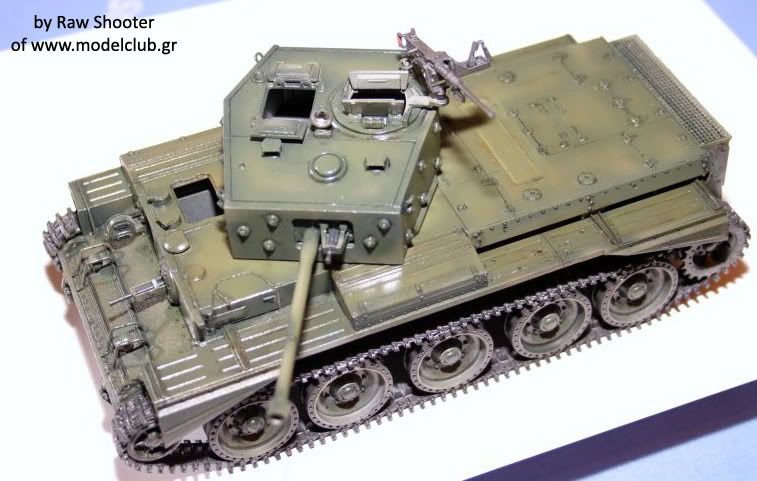
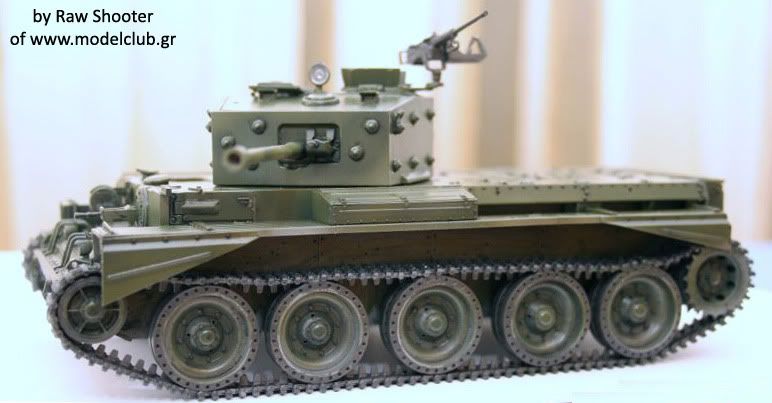
1:35 model of the Centaur by Raw Shooter of www.modelclub.gr:
Centaur 1:35 top view Centaur 1:35 side view
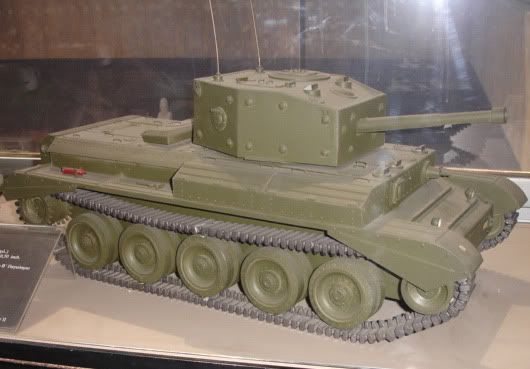
A scale model from the National War Museum, Athens:
Centaur scale model from the National War Museum, Athens

Saturday, 3 April 2010

(1927-1940) Submarine Y-3 "Proteus"

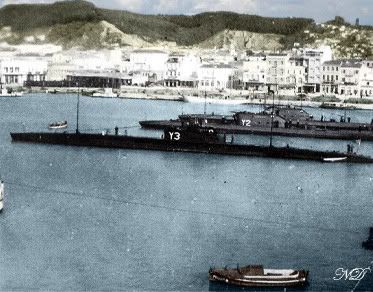
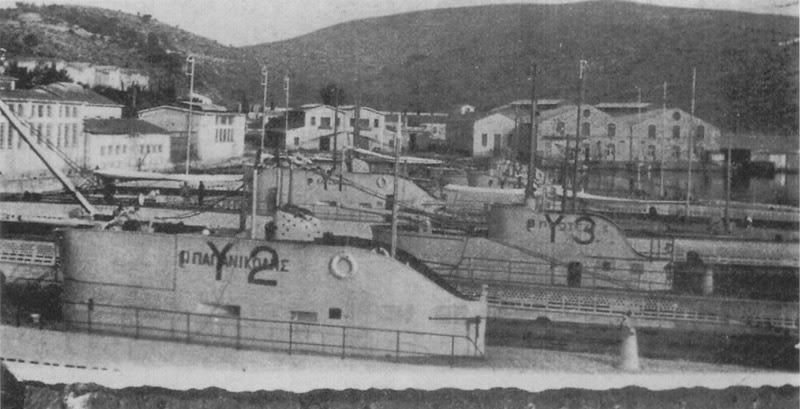
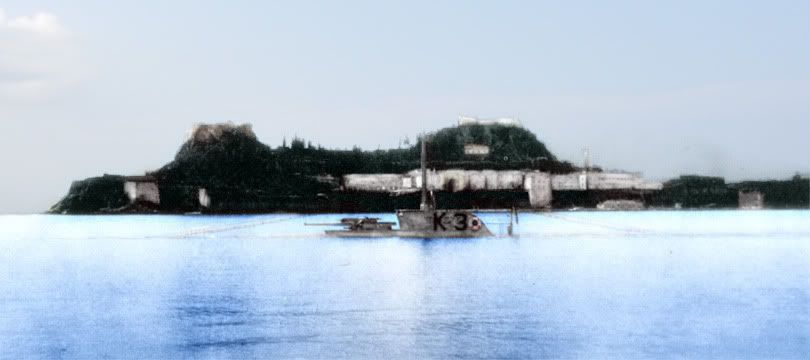
Y-3 Proteus next to Y-2 PapanikolisA Loire-Simonot type submarine, similar to the earlier Katsonis class, Y-3 Proteus was the first Greek submarine to be lost in World War 2. It was built in Nantes, at the At. and Ch. De La Loire, at a cost of 119,000 francs for the Greeks.
Having sunk early, Proteus was the only submarine of her class that didn't serve under the control of the Royal Navy during the war.


Y-3 Proteus - location of sinking

Operational History

24 Oct. 1927 - Launched
31 Aug 1929 - Commissioned.
30 Oct. 1940 - 5 Nov. 1940 - First patrol. Patraikos Gulf. 152 hours (56 subm./96 surf.)
15 Nov. 1940 - 24 Nov. 1940 - Second patrol. Adriatic. 214 hours (98 Subm./116 surf.)
25 Dec. 1940 - 29 Dec. 1940 - Third patrol. Adriatic. 51 hours (20 Subm./31 surf.)
19 Dec. 1940 - Locates Italian convoy. Torpedoes and sinks Italian cargo ship "Sardegna" (11,452 GRT). Very quickly, Proteus is spotted by the Italian Y-3 Proteus next to Y-2 Papanikolis in Salaminatorpedoboat Antares. Antares drops 11 depth charges on Proteus, forces it to surface and rams it 40 miles East of Brindisi (40º31'N, 19º02'E). All hands lost.
10 Jan. 1941 - At 09:25, the Italian radio announces that a Greek submarine was sunk three weeks ago. On 19 Dec. 1940 Greek steamboat "Ionia" had intercepted the SSS distess signal of "Sardegna". As a result the Greeks were aware of the success of Proteus, but not of its fate until the Italian radio announcement.


Specifications
Y-3 ProteusY-3 Proteus submarine of the Proteus class

Displacement: Surfaced 750 tons, Submerged 960 tons
Length: 68.6 m
Beam: 5.73 m
Draft: 4.18 m
Propulsion: 2-shaft Sulzer diesels plus 2 electric motors, 1420bhp/1200shp
Complement: 41 - 45
Max. Dive: 80 m
Speed: (Surf.) 14 knots, (Subm.) 9.5 knots
Range: (Surf.) 4,000 nm @ 10 knots, (Subm.) 100 nm @ 5 knots
Armament: 100mm gun at the forward end of the conning tower, at casing level (150 shells). No external tubes. 8x 533mm torpedo tubes (6 bow, 2 stern; 8 torpedoes)

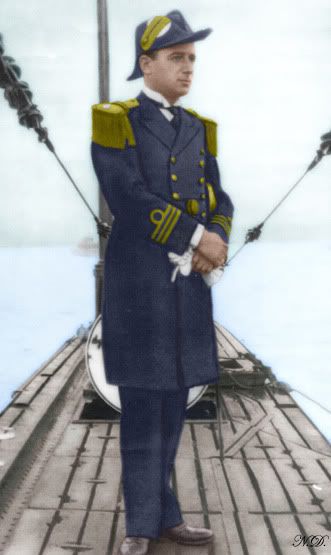
The crew, when sunk Captain of Y-3, Michail Chatzikonstantis (colourised photo)
Michail Chatzikonstantis (top photo - Born 1906, Piraeus, father: Antonios)

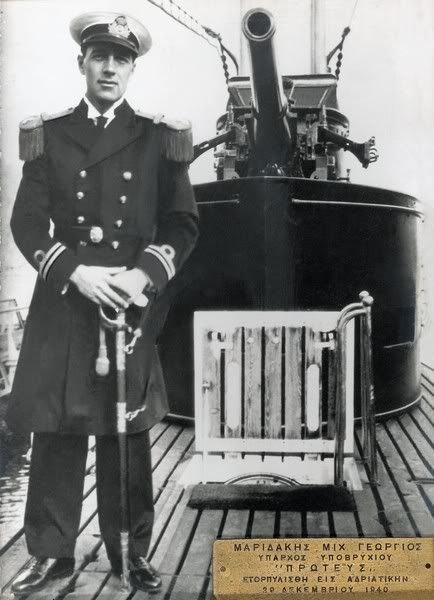
Georgios Maridakis (second photo - Born 1910, Chania)

Andreas Tournas (third photo - Born 1912, Tripoli, father: Konstantinos)

Theodoros Konidis (bottom photo - Born 1913, Konstantinoi Messinias, father: Antonios)

Kyriakos Nikolarakos
Dionysios Tilemaxos
Antonios Kafetzis
Ioannis Kyriazis
Thrasyvoulos Tsatsas
Anastasios Ntontos Officer of Y-3, Georgios Maridakis
Vasilios Georgiou
Achilleus Toulis
Theodoros Sanoudos
Dimitrios Giannelis
Anastasios Anastasopoulos
Georgios Tsalikis
Panagiotis Sklavos
Ilias Katsouranis
Napoleon Anthis
Dionysios Anninos
Nikolaos Armenis
Spyridonas Vlachos
Pantelis Voutsinas
Spyridon Gialypsos
Stamatios Giatrakos
Charalampos Delis
Konstantinos Dimitrakopoulos Officer of Y-3, Andreas Tournas
Christos Zafiris
Panagiotis Theodosis
Georgios Kapsos
Emmanuil Levantis
Georgios Liatsis
Panagiotis Minas
Georgios Morianos
Stavros Mousoulis
Dimitrios Orfanios
Zacharias Pantaleon
Michail Panagis
Panagiotis Parasxis
Eleftherios Perdikouris
Apostolos Skarakis
Georgios Tilemaxos
Aristidis Tousas
Panagiotis Fourikis Captain of Y-3, Theodoros Konidis
Petros Chatzidimitriou
Konstantinos Cheliotis
Georgios Chrysanthopoulos
Petros Psyllas


For gamers and game designers
In 1940, Proteus was already an aged submarine. On paper, it was marginally better than Papanikolis and Katsonis.


For modellers
Proteus has been included in the Axis & Allies Naval Miniatures game (1:1800 scale). It comes originally in light grey colour. The photo below shows my repainted black Proteus.
My repainted Proteus from the Axis & Allies Naval Miniatures game (1:1800 scale)

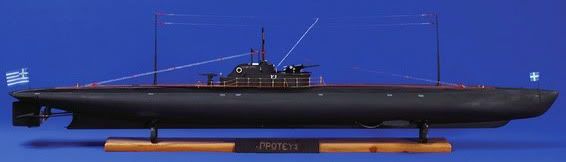
The photo below is from the Hellenic Maritime Museum in Athens.


Y-3 Proteus model from the Hellenic Maritime Museum in Greece

Sunday, 18 October 2009

(1940-1990s) Marmon-Herrington

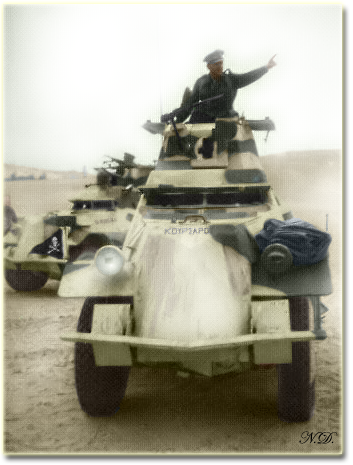
Greek Marmon-Herrington Mk.III in North Africa. The specific one's name is 'Koursaros', which means 'Corsair'The Greeks were given a small number of Marmon-Herrington I armoured cars that participated in the defence against the Germans. Later, the Greek army in the Middle East received two Marmon-Herrington III armoured cars, and several more, of the IVf type, after the liberation in 1944. IV was a complete redesign. It had a monocoque hull, had its engine mounted at the rear, not the front, and had a larger, two-man, turret, in place of the original one-man turret. Some IVfs remained in service until the 1990s.

I recorded this video during the Bovington Tank Fest of June 27, 2010. It's a Marmon Herrington IV which was given to Greece after World War II, probably during the Civil War:


Operational History

1945-1949 - During the Greek civil war, IVF armoured cars have their mechanical parts removed and are placed on flat wagons to protect trains.
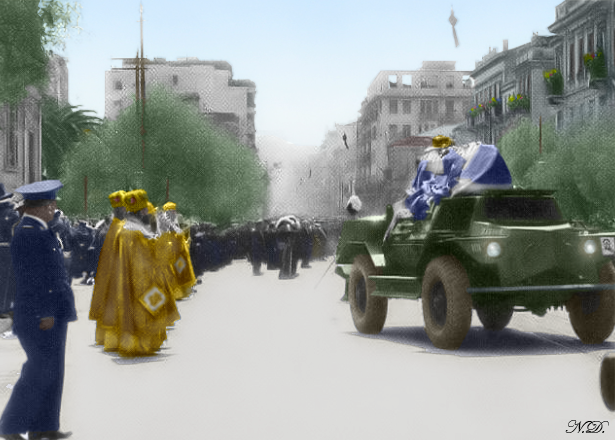
Marmon-Herrington IVF carrying the body of King George II (April 1947)1974 - At the time of the Turkish invasion of Cyprus, the Cypriot army has 45 Marmon Herringtons.
1990s - The Greek army is still using Marmon Herringtons in mechanised infantry battalions in the Aegean Islands.


Specifications
Marmon Herrington Mk.II/III armoured car
Crew: 4
Weight: 6 tons
Length: 5.31 m
Height: 2.49 m
Width: (II) 1.98m / (III) 2.29 m
Armour: 12 mm
Engine: 8-cylinder Ford petrol. 85 hp
Speed: 80 km/h
Operational Range: (on-road) 322 km, (off-road 193 km)
Armament: 1x 0.55" Boys Anti Tank rifle, 1x 7.92mm Bren MG, 1x 7.7mm vickers AA MG

Marmon Herrington Mk.IVF armoured car
Crew: 4
Weight: 6.4 tonnes
Marmon-Herrington IV outside the War Museum of ThessalonikiLength: 5.51 m
Height: 2.29 m
Width: 1.83 m
Armour: 20 mm
Engine: 8-cylinder Ford V90 petrol. 95 hp (71 kW), 3600 rpm
Speed: 80 km/h
Operational Range: (on-road) 322 km, (off-road 193 km)
Armament: 1x 40mm QF 2-pdr, 2x 7.92mm Browning MG

For gamers and game designers
Being one of their few modern armoured vehicles, the Marmon Herrington was invaluable to the Greek forces.

For modellers


A Marmon-Herrington IV from the Army's Grove in Goudi, Athens. Photos by Xristos of modelclub.gr:
Marmon-Herrington IV from the Army's Grove in Goudi, Athens

A scale model of the Marmon-Herrington from the War Museum in Athens.

Marmon-Herrington scale model

Sunday, 9 August 2009

(1912-1941) Destroyer "Leon II"

Destroyer Leon II probably near Skaramanga, post-refit.Leon II was one of four Wild Beast class destroyers built in the Camell Laird shipyards in Liverpool. They were originally intended for Argentina, but they were bought by Greece for £148,000 each. For the Balkan Wars, these ships were not given torpedoes and were considered scouts rather than destroyers, because the Royal Hellenic Navy had purchased only minimum ammunitions; 3,000 torpedoes for the whole of the fleet. Leon had a lot of bad luck and no major achievements during the wars that it participated in.


Operational History
19 Sep. 1912 - Commissioned in the Royal Hellenic Navy. It will soon participate in the Balkan wars under Lieutenant Commander J. Razikotsikas, while also on board is Squadron Commander D. Papachristos.
Oct. 1916 - Seized by the French. Participates in World War I on their side.
Destroyer Leon II1918 - Returns to escort duty under Greek colours and in the blockades of the coasts of the Black Sea from the Bosphorus to Trebizond.
22 Dec. 1921 - While moored with Ierax in Piraeus harbour, they are both severely damaged by the explosion of a depth charge bomb which the crew of Leon was transporting. Two officers, one petty officer and two sailors are killed on Leon and two sailors on Ierax. Leon completely loses her aft section up to her stern gun.
1925-27 - Undergoes refurbishment.
Destroyer Leon II after its 1925 refit1 March 1935 - During the failed coup attempt of 1935, Leon is briefly captured by the venizelists.
1940 - Leon is commanded by Petros Protopapas during World War 2.
18 April 1941 - During a convoy escort, she collides with passenger ship Ardena and two depth charges explode. As a result, the stern section is cut off and two officers get killed.
15 May 1941 - Sunk by German bombers in Souda Bay (Crete) where she was towed from Salamis Naval Base.


Specifications
Destroyer Leon IIWild-beast class destroyer "Leon" II

Displacement: (Standard) 880 tons
Length: 89.4 m
Beam: 8.3 m
Draft: 3 m
Range: 530 m
Speed: (before 1925) 31 knots, (from 1925) 32 knots
Complement: 58
Armament: (as completed) 4× Bethlehem 102 mm, 1× 75 mm AA, 6× 533 mm T.T., 3× electric search lights
(from 1925) 75 mm AA removed, 37 mm AA added, four-barrel 40 mm added, 2 mortars added, modified for laying 40 mines

For modellers
Destroyer Leon II - scale model from the National Maritime MuseumThe ship differs significantly before and after its 1925 refit. This scale model represents the pre-1925 version with the five funnels.


For gamers and game designers
Notice that Leon II has no torpedoes during the Balkan wars and can act only as scout. In later years it acts as proper destroyer with torpedoes, depth charges, etc.


Saturday, 11 July 2009

(1931-1936) MS.230

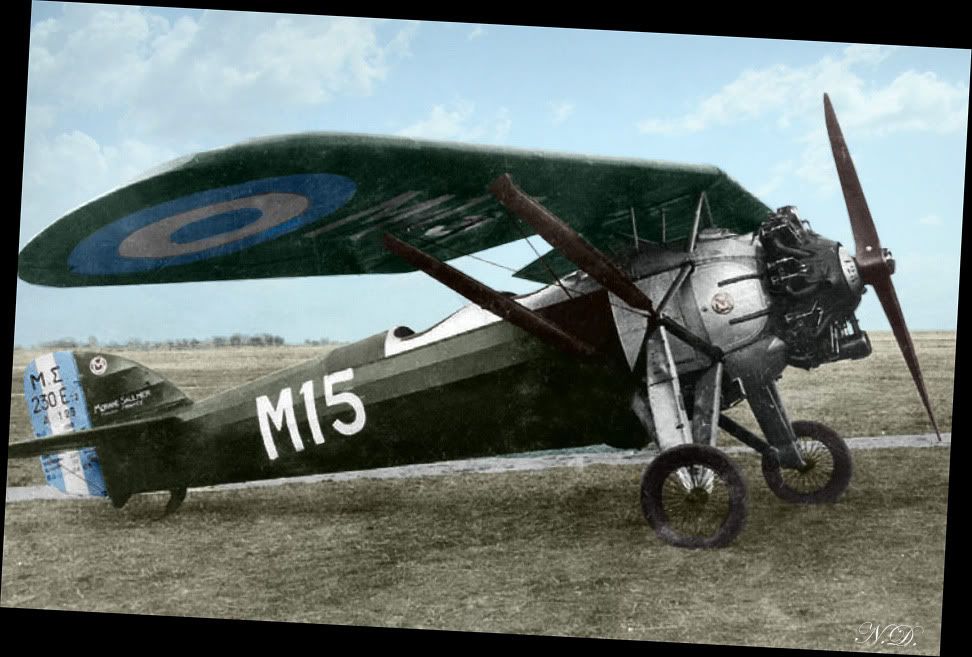
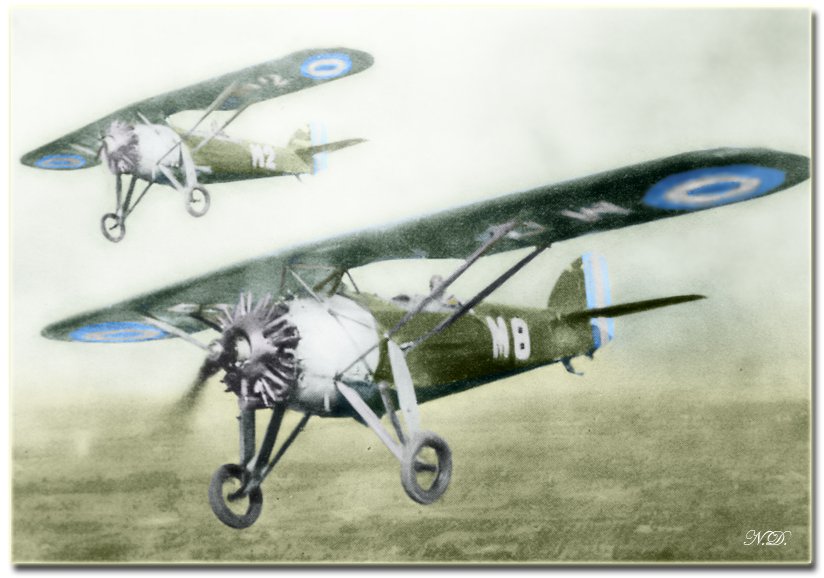
MS.230Between 1931 and 1936, Greece used the French Morane Saulnier MS.230 aircraft as elementary trainers in the Air Force. They were a brand new design at the time, the French equivalent of the iconic Boeing Stearman of the Americans and Tiger Moth of the British.

Operational History
October 1930 - Greece orders 18 MS.230 aircraft from France.
1931 - Delivered.
1936 - Removed from service as training aircraft and used only for maintenance flights until the beginning of World War 2. According to some sources, a small number were used for reconnaissance until 1941.

Specifications
MS.230 ET2 trainer

Crew: 2 (instructor and student)
Engine: Salmson 9AB, 9-cylinder, air-cooled radial engine, 109 kW (230 hp)
Weight: (Takeoff) 1,160 kg, (Empty) 832.35 kg MS230s in flight
Height: 2.98 m
Length: 6.93 m
Wingspan: 10.72 m
Speed: 204 km/h
Range: 560 km
Ceiling: 5,000 m
Armament: none


For gamers and game designers
This aircraft has little gaming value. It's just a trainer. Relatively modern for its time, but still only an elementary trainer.