Saturday, 13 October 2012

(1918-1932) Airco De Havilland DH9

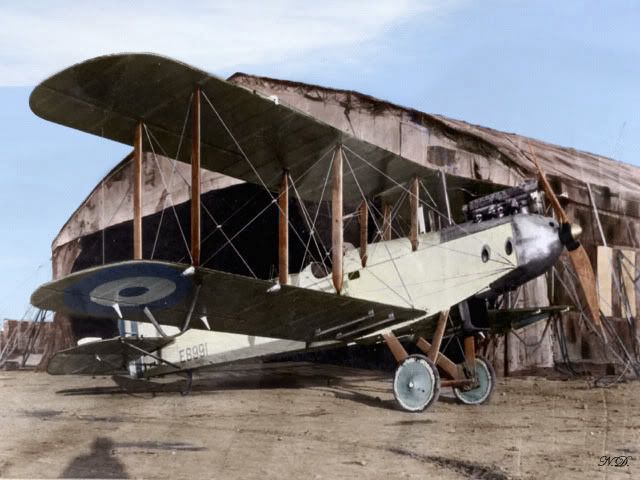
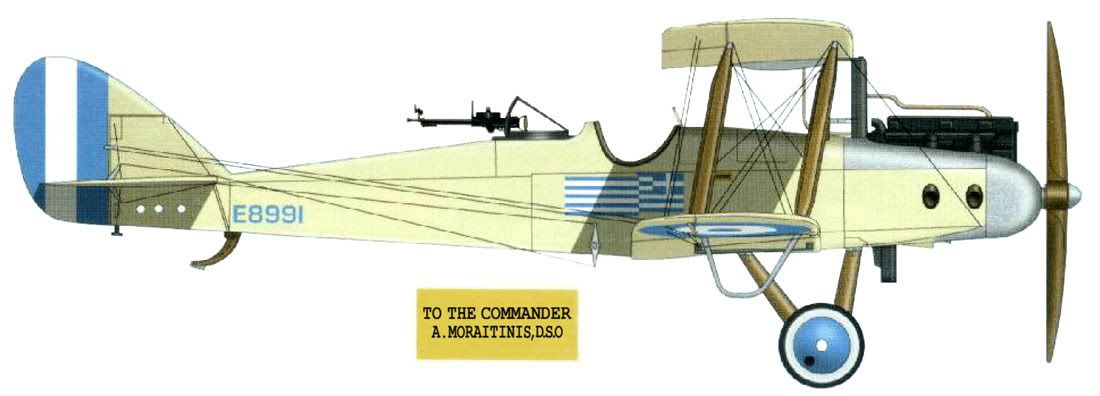
One of the Greek DH9 aircraft. The specific one is said to have been a gift of the British to A. MoraitinisAfter the end of World War I and over the next two years, the Greeks received 41 RAF surplus Airco de Havilland D.H.9 two-seater bombers. These were mainly used by the Naval Air Service during the Asia Minor campaign, with at least six of them converted into hydroplanes in 1926. A few D.H.9s were used for training up to 1932.

The photo above shows the E8991 aircraft. According to the Ptisi magazine and the personal archives of H. Daloumis, it was built in Airco, Hendon, in the summer of 1918, as part of RAF order 35a/418/C.296 for 66 such aircraft. It reached London in a package on 19 Sep. 1918, and Moudros, where it was assembled ready to fly, on 3 Oct. 1918. Greek sources mention that it was offered as a gift to A. Moraitinis, the top Greek fighter ace of all time.

Operational History
Late 1918 - The first D.H.9s reach Greece.
1919-1920 - The aircraft are being delivered to the Greek Naval Air Service.
May 1920 - The DH9s begin operations from Paradisi airfield, Smyrna.
1926 - At least six D.H.9s are converted into hydroplanes.
1932 - D.H.9s are removed from service.

Specifications
Airco De Havilland D.H.9
Length: 9.27 m
Wingspan: 12.92 m
Height: 3.44 m
Wing Area: 40.3 sq.m
Weight: (empty) 1,014 kg, (max take-off) 1,723 kg
Engine: 1x Siddeley Puma engine 230 HP (172 kW)
Speed: 182 km/h
Endurance: 4.5 hrs
Ceiling: 4,730 m
Climb to 10,000 ft (3,048 m): 18.5 mins
Crew: 2
Armament: Forward firing Vickers machine gun and 1 or 2 × Rear Lewis guns on scarff ring. Bomb payload 209 kg


For Gamers and Game designers
The DH9 was exported widely mainly for its low cost rather than for its performance, which was inferior to most contemporary bombers. Interestingly, the Turks used the same bomber.


For Modellers
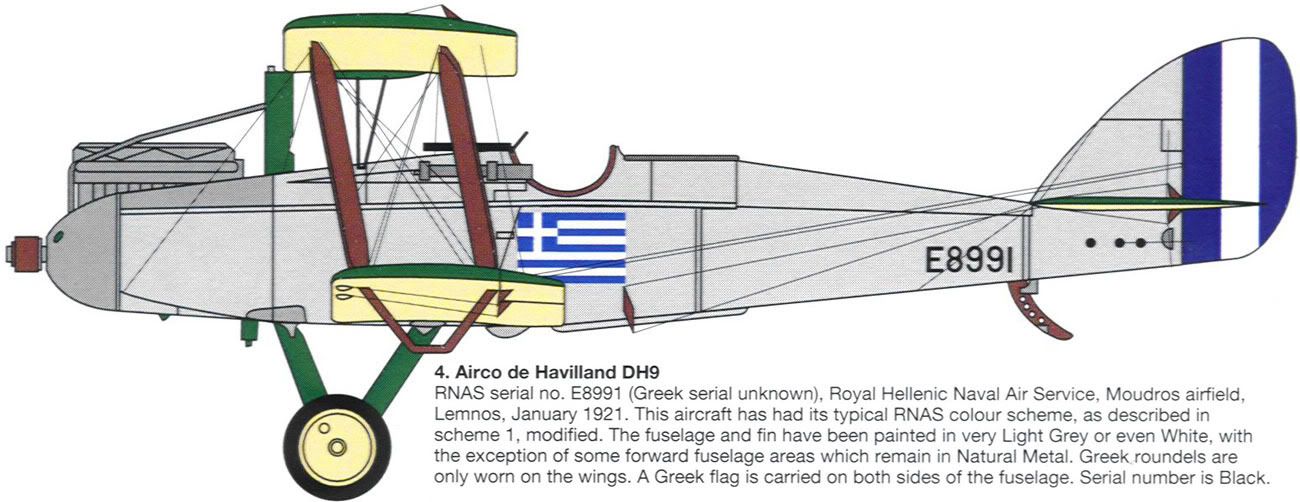
E8991 (The personal aircraft of Aristidis Moraitinis)
Profiles by D. Georgiadis, Insignia Magazine and Pierre-Andre Tilley (Aero Journal No.14, Aug.- Sep. 2000):

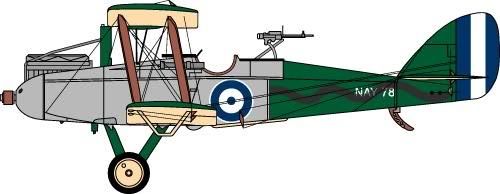
NAY-78
A profile by W.I. Boucher of www.wwiaviation.com. The specific aircraft was stationed at Afion-Karahisar in July 1921. According to the same source, roundels on the lower wing surface do not have an 1-inch white outline. The second profile is from Insignia magazine.

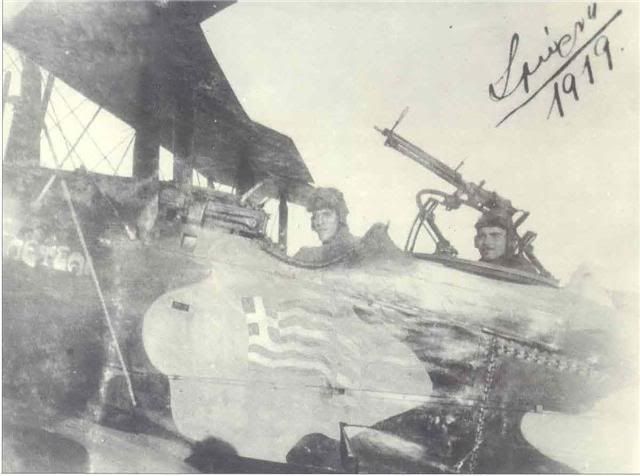
"SPETSAI"
A profile by D. Georgiadis and a photo taken in Smyrna, 1919.

A very impressive 1/20 RC model by George Kandylakis as posted in www.rcgroups.com :

Wednesday, 27 June 2012

(1928-1943) Submarine Y-1 "Katsonis"

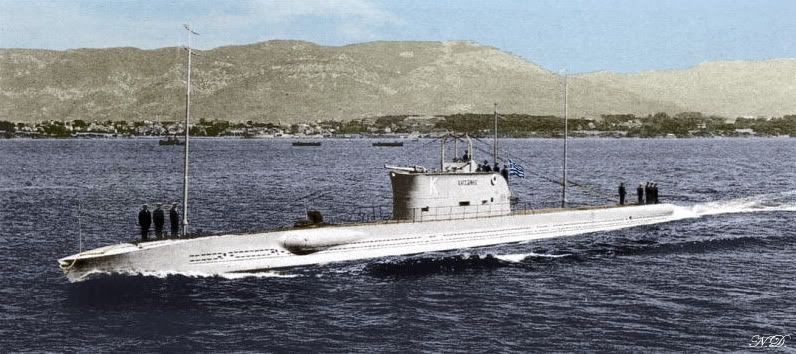
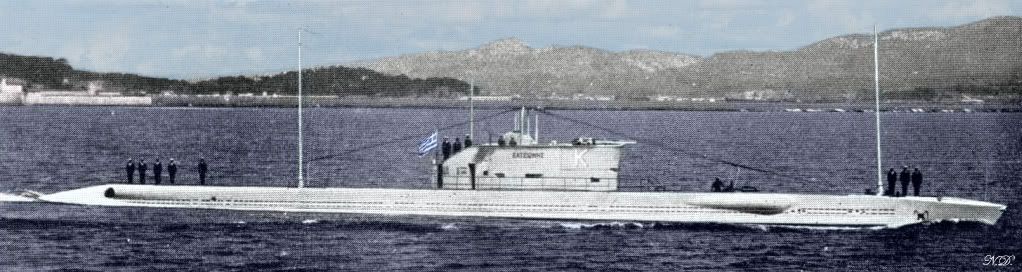
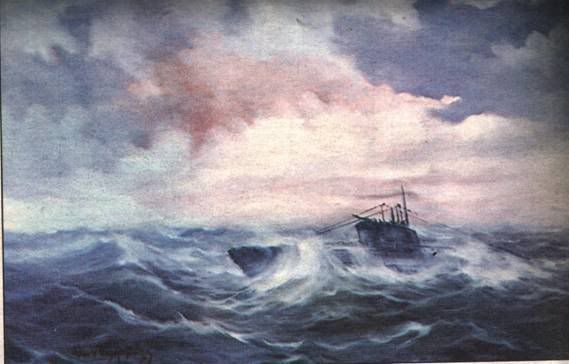
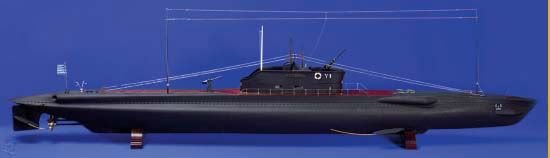
Y-1 KatsonisA sister of Y-2 "Papanikolis", Y-1 "Katsonis" was one of only six submarines available to the Greeks in 1940. Despite being an aged submarine by World War II, it was used extensively in war patrols and commando operations in the Adriatic and the Aegean Sea, before being sunk by a German subchaser in 1943.

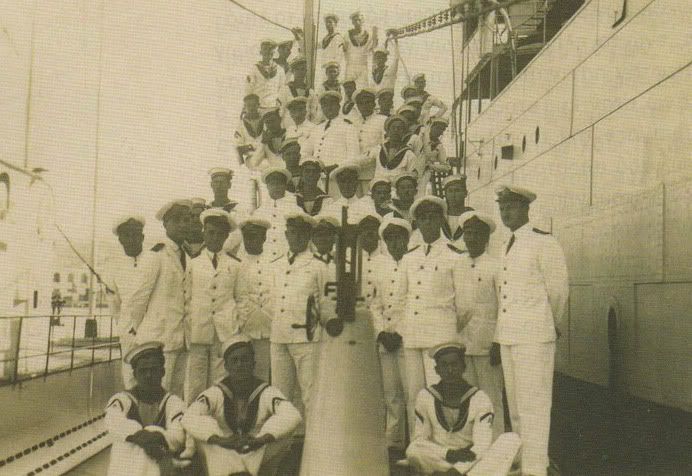
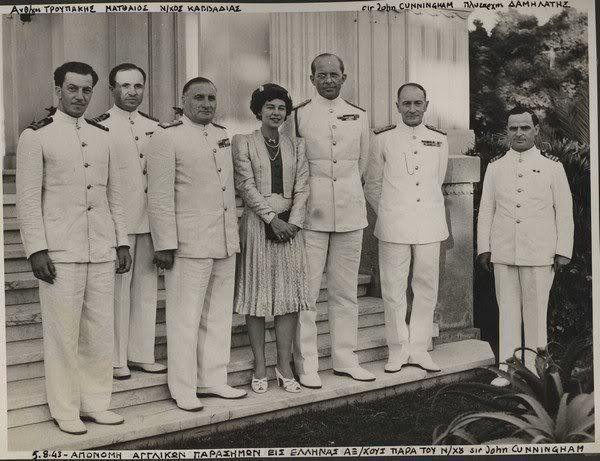
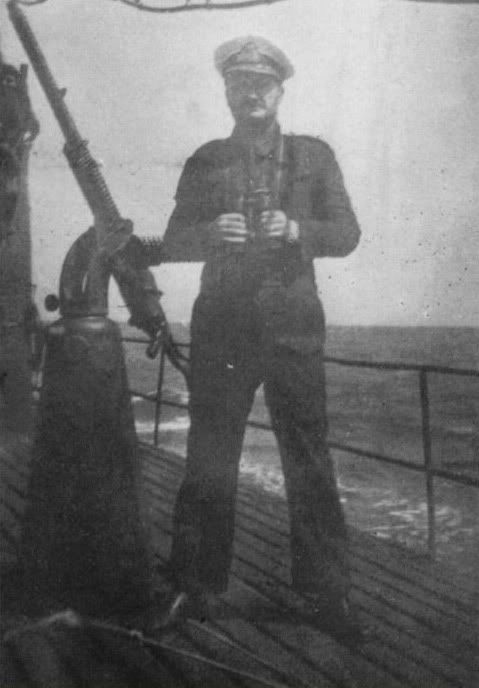
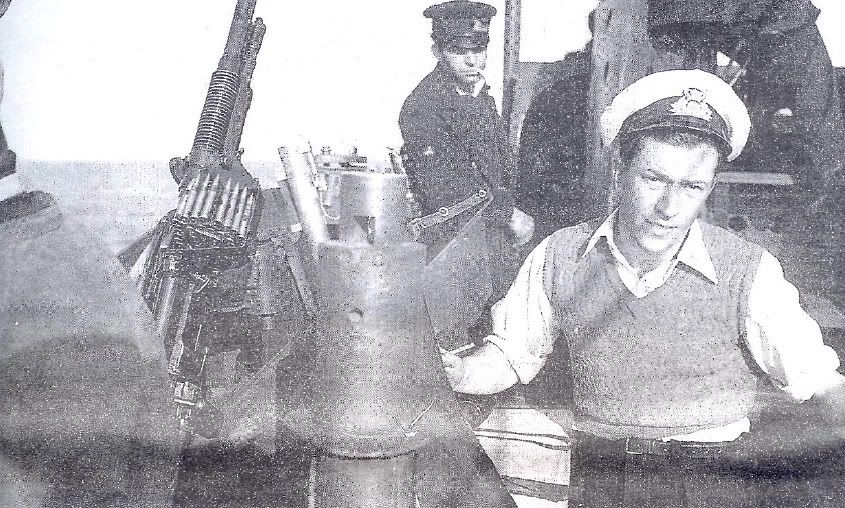
The crew of Katsonis:
The crew of Katsonis

Y-1 Katsonis in Malta before WWII


Operational History
1925 - Laid down
1927 - Launched
8 June 1928 - Commissioned. First captain is Cdr Κ. Arvanitis.
3 - 10 Nov. 1940 - First war patrol (under Cdr Spanidis). Adriatic, 216 hours (84 subm./132 surf.).
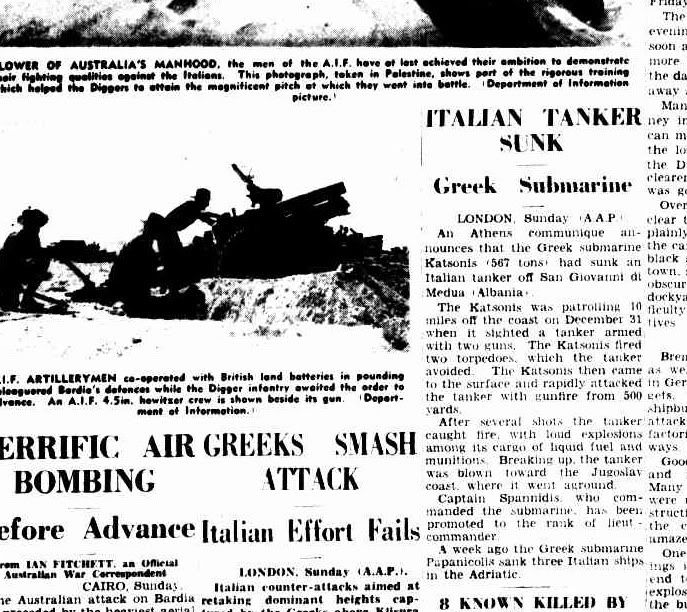
22 Dec. 1940 - 4 Jan. 1941 - Second war patrol (under Cdr The Argus, 6 January 1941 (Australian newspaper)Athanasios Spanidis). Adriatic, 312 hours (132 subm./180 surf.).
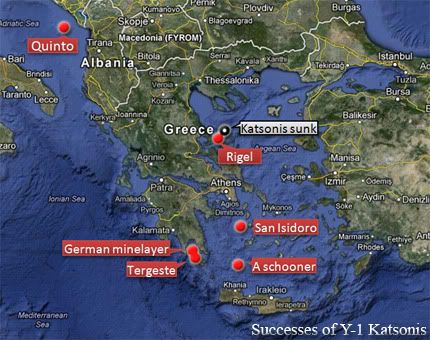
31 Dec. 1940 - Sinks the 531-ton Italian freighter Quinto (531 GRT) off Antivari
14 - 21 Feb. 1941 - Third war patrol (under Cdr Spanidis). Adriatic, 168 hours (60 subm./108 surf.).
24 Mar. - 1 Apr. 1941 - Fourth war patrol (under Cdr Spanidis). Adriatic, 216 hours (84 subm./132 surf.).
From Port Said to Port Sudan Apr. 1941 - After the German invasion, Katsonis escapes to the Middle East, operating with the British Pennant number N 16.
2 July 1942 - Damaged while exiting a dry dock at Port Said.
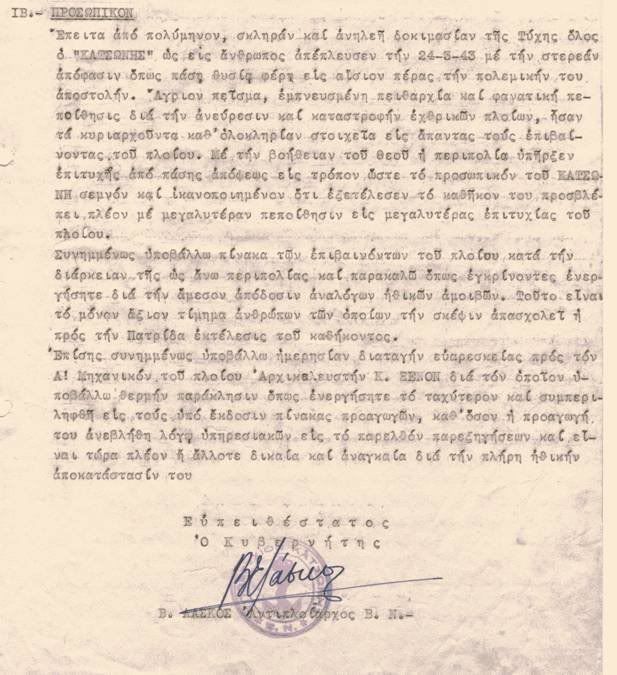
28 Mar. - 10 Apr. 1943 - Fifth war patrol (under Cdr Laskos). Aegean/Crete, 408 hours (170 subm./238 surf.). After patrolling the North Aegean and later disembarking commandos in the Lakonia, Katsonis encounters three sail boats, which, contrary to orders, Laskos spares because they were carrying food to Piraeus during the famine. The same day they encounter another sail boat, one of the crew of which offers information regarding the movements of an enemy patrol boat off Letter by Vasileios Laskos Gytheio. They take him on board and give him the nickname "Lafiro" (plunder).
2 Apr. 1943 - Katsonis approaches the port of Gytheio and sinks an Italian minelayer with torpedoes. According to a British article, it was carrying depth charges and torpedoes, and 20 Italian officers and soldiers were killed on it.
5 Apr. 1943 - Sinks the Spanish/German 1,500-ton merchant steamship San Issidro (322 GRT) off Kythnos.
21 May - 4 June 1943 - Sixth war patrol (under Cdr Laskos). Aegean, 456 hours (186 subm./270 surf.).
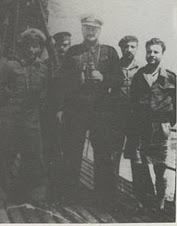
Vasileios Laskos 29 May 1943 - Sinks the German freighter Rigel (552 GRT) near Skiathos.
2 June 1943 - Fires two torpedoes at the Italian cargo ship Versilia (591 GRT) off Karlovassi, but misses.
5 - 14 Sep. 1943 - Seventh war patrol (under Cdr Laskos). North Aegean, 212 hours (107 subm./105 surf.). The mission is to patrol North Aegean and land commandos. The boat quickly shows its age, with main problem the failure of one engine. Nevertheless, Laskos continues the war patrol.
8 Sep. 1943 - Katsonis receives the message for the Italian armistice.
11 Sep. 1943 - Lands the Greek commandos without incident.
12 Sep. 1943 - Intercepts two sail boats and Laskos finds out that a captured French ship, Simfra, is carrying German soldiers on leave.
13 - 14 Sep. 1943 - Charges its batteries and submerges to patrol the area between Pilio and Skiathos, looking for Simfra. Laskos spots a sail boat and decides to surface to try to get more information about Simfra. While he is still talking probably to the boat's skipper, what looks like Simfra is spotted in the horizon. Katsonis soon receives optical identification signals from the ship, but it isn't Simfra. It is the German subchaser UJ-2101. Katsonis crash dives, but soon receives depth charges and is forced to resurface. Laskos orders the crew to return fire with the cannon, and after the gunners are killed, he himself takes their place, but is soon killed too, and Katsonis sinks.

31 men of the crew, including the captain, as well as "Lafiro" went down with Katsonis:
V. LASKOS
S. MYKONIOS
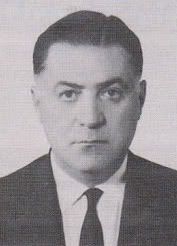
S. TROUPAKIS (photo)
TroupakisP. LAMPRINOUDIS
M. KAVALOUDIS
K. KSENOS
I. CHRYSOCHERIS
N. PANAGIOTIZAS
D. MARALETOS
L. STAMOS
P. MAGIATIS
V. RANTOS
N. MANTONANAKIS
A. VLACHAKIS
D. KOUVELIS
E. TSATSARIS
K. SELLAKIS
P. TSAKONAS
I. ECONOMOU
A. KRESTAS
E. PLATIDIS
S. KSEPAPADEAS
Ch. ALEXIOU
N. THYMARAS
M. LIMNAIOS
X. MITSIALIS Tsoukalas
G. LENTZAKIS
N. MOSCHONAS
A. FOUNTOULAKOS
N. KOUROUZIS
D. PRINTZOS
Z. ZOGRAFOS

15 were captured, while Lt. Tsoukalas (photo) and petty officers Tsingros swam for 9 hours to reach Skiathos and Antoniou to reach Pilio. They later returned to the Middle East.
A map of the successes of Y-1 Katsonis.
Y-1 Katsonis
Specifications
Y-1 Katsonis submarine
Oil painting of Katsonis by I. Kalogeropoulos
Displacement: Surfaced 576 tons, Submerged 775 tons
Length: 62.4 m
Beam: 5.3 m
Draft: 3.35 m
Propulsion: 2 × 2-cycle Schneider-Carels diesel 1,300hp, 2 × electric 1,000hp
Complement: 39-45
Max. Dive: 73 m
Speed: (Surf.) 14 knots, (Subm.) 9.5 knots
Range: (Surf.) 3,500 nm @ 10 knots, (Subm.) 100 nm @ 5 knots
Armament: 6x 533mm torpedo tubes (2 internal bow, 2 external bow, 2 external stern; 7 torpedoes), 1x 100mm cannon, 2x machine guns
For gamers and game designers
An aged submarine, Katsonis was obsolescent by 1940.

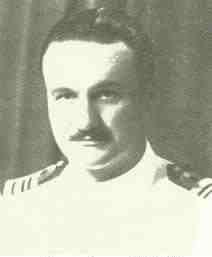
Captain Vasileios Laskos
Vasileios Laskos Laskos was born on 17 Sep. 1899 in Elefsina. In 1922, he was a Sub Lieutenant on the torpedo boat Aspis. In September, he leaves his commander on the shore and joins the rebel fleet of the Plastiras movement in Cavo Doro. General Pangkalos takes power militarily, abolishes the monarchy and declares the Second Hellenic Republic. A close supporter of Pangkalos, Laskos stays with him until the Kondylis movement overthrows Pangkalos and sends him to prison. As a collaborator of Pangkalos, Laskos is now relegated to being in charge of only a warehouse of 50 faulty torpedoes. However, Laskos takes on the task to repair these torpedoes and subsequently receives the congratulations of the Minister of Naval Affairs and is rewarded with a trip to England to supervise the purchase of 50 newly ordered torpedoes.

When he returns, he decides to join the submarine fleet. In 1930, at the age of 32, he is assigned to Y-1 Katsonis. After the failed elections of 1933, he is convinced into taking part in the Venizelos movement. On 1 Mar. 1935, he manages to take control of the submarine base and helps the ships to receive their ammunition and escape. When the movement fails on land, the protagonists escape to the then Italian Dodecannese and then Italy. While in Italy, Laskos is charged back home with treason and sentenced twice to death. A year later, they are all pardoned and return to Greece. After being unemployed for a while, he is trusted to build and organise a factory in Elefsina, a project he carries out succesfully.

On October 1940, Laskos returns to active duty, leading a squadron of auxiliaries. When the Germans invade, he tries to escape to the Middle East. He is first caught by the Turks and is returned to Chios, where he hides as a nurse in a clinic. In the Spring of 1942, he tries again and manages to join the Free Greek forces in the Middle East. He wishes to return to the submarines, but he is now already 43 and Vasileios Laskos has missed the last eight years. He convinces fellow Arvanites, Admiral Aleksandros Sakellariou and Captain Panagiotis Konstas to give him command of Katsonis, which was the submarine most in need of repairs. After 7 months of repairs in Port Sudan, Katsonis is now in Port Said for dry docking. There it sinks due to human error. Laskos manages to convince the British to raise it, and a few months later the submarine is operational.


For modellers
A model of Katsonis
Katsonis model (unknown creator)
Some more photos:
Katsonis in 1928 Katsonis Stefanos Troupakis. Katsonis heading towards Haifa

Monday, 9 January 2012

(1927-1938) KEA Chelidon

KEA Chelidon, and in front of it most probably Lowe-Wylde and H.G. TraversThe Chelidon was designed and built in the State Aircraft Factory (KEA) by a Greek team under the supervision of Charles H. Lowe-Wylde, according to the Navy's specifications. Its development was completed in an impessive eight weeks. It was a two-seater military biplane designed mainly for advanced training and reconnaissance, and with the option of conversion into a hydroplane.
After testing though, it was considered inferior to its contemporary alternatives and production was cancelled. The Navy would be equipped instead with Armstrong Whitworth Atlas biplanes. KEA would go on building British-designed aircraft under license, including Avro 504, Atlas and 621 Tutor, but no other Greek-designed aircraft.

The photo above shows most probably C.H. Lowe-Wylde and Blackburn's test pilot (Herbert Gardner "Tiny" Travers).

Operational History
Dec. 1926 - The navy orders 18 aircraft
11 Feb. 1927 - First flight of the prototype.
23 May 1927 - Last three takeoffs from Tatoi. The last flight lasted 30 minutes and C.H.Wylde himself was in the back seat.
After a three month test flight period, the aircraft's performance is deemed inferior to alternative options, and the order is cancelled. The prototype is possibly used for technical personnel training at KEA and is most probably scrapped in 1938.

Specifications
KEA Chelidon

Length: 5.79 m
Wingspan: 8.17 m
Engine: 1x Salmson (120 hp)
Speed: ~150 km/h
Crew: 2


For Gamers and Game designers With production having been cancelled, the sole KEA Chelidon prototype was possibly used as a training platform for the factory's engineers.


For Modellers
A profile by Dimitris Georgiadis:

Monday, 26 December 2011

(1940-41) Women of Pindos

Metsovo, Katara. Clearing the roadDuring the Greco-Italian war, the Greeks had the significant advantage of support from the civilians and especially the women of nearby villages.

For example, the Greek army had published instructions for knitting socks, Official instructions for knitting socks, gloves and scarvesgloves and scarves, so that they would be "official issue" and the same for all soldiers. Out of all Greek women, however, it was the women of the Pindos mountains that standed out by bringing desperately needed supplies to the front under gruelling winter conditions and above 2 km altitude.

From Argiris Balatsos's War Diary (in "Martyries 1940-1941", Hatzipera-Fafaliou, Athens, Kedros, 1982, p. 103):

"7 November 1940. ... I met women who were carrying ammunition. One was 88 years old. Another one told me that she had locked the kid in the shed, so that she could come to help the army. During the night, I saw an old woman taking care of the two kids, while their mother was baking bread for the army under the candle light. Metsovo, Katara. Clearing the roadThe snow, the ice, the dreadful cold, did not seem to bother them. They all wanted to help the army where the supply trucks couldn't reach. True wonderwomen. What a difference with the women of the cities!"

By Takis E. Papagiannopoulos (in "Martyries 1940-1941", Hatzipera-Fafaliou, Athens, Kedros, 1982, p. 104):

"... When they reached the River Voyiousa (Aoos) and the fearless women saw that the raging waters were making the bridge engineers' job difficult, they spontaneously did something that was repeated later at Kalamas and Drinos. They entered the waters, held each other firmly from the shoulders and formed a human wall to break the force of the waters where the bridge engineers were working."

The monument of the Woman of Pindos:


By Nikiforos Vrettakos ("Γυναίκες της Πίνδου", in Greek):

Painting by unknown artist"Κι οι μάνες τα κοφτά γκρεμνά σαν Παναγιές τ' ανέβαιναν.
Με την ευκή στον ώμο τους κατά το γιό πηγαίναν
και τις αεροτραμπάλιζε ο άνεμος φορτωμένες
κι έλυνε τα τσεμπέρια τους κι έπαιρνε τα μαλλιά τους
κι έδερνε τα φουστάνια τους και τις σπαθοκοπούσε,
μ' αυτές αντροπατάγανε, ψηλά, πέτρα την πέτρα
κι ανηφορίζαν στη γραμμή, όσο που μες στα σύννεφα
χάνονταν ορθομέτωπες η μιά πίσω απ' την άλλη".


In his memoirs, artillery commander Asimakopoulos mentions the names of women of the village of K. Pedina who helped his unit reach the Peak of St. Vlasis.
Young women: LEFTERIA G. THEODORIOU, GALATEIA Nap. TRIPSA, THALEIA K. OIKONOMIDOU, PANORAIA K. TSANTI, ANNA G. KASKA and others.
Women: MEROPI CHR. TOULOUPI, ISMINI TH. KALANTZI, ATHINA KYR. LEFKADITI, Clearing the snow
ARIADNI D. GOGOLOU, THOUSIA ANDREA VOGLI, LAKENA AP. ARANITI, EVRIDIKI CHR. GRAZIOU, LOUKRITIA PAN. CHACHARI, RINA K. GEORGIOU, THEODOULA D. DACHRI, NIKI TH. KOULI, MANI GRABALI, IPPOLITI SIOUSIOU, KLEIO SKEPARIOTI, SOULA CHOULIARA, POLIMNIA GABALI, KIRIAKO GABALI, VGENO SKEPARIOTI and others.


In a book on the role of women of Epirus in 1940, E. Tzialla-Mantziou mentions the following names: APERGI CHRISANTHI, VOUTZATI ANTHOULA, YIOTA EVAGELI, GRIMOTSI-KISI EVDOXIA, MOUTZOULI ATHINA (Fourka), GOUVELI ASPASIA (Fourka), ZIOGA ASPASIA (Fourka), IOANNIDI FROSO (TSEPELOVO), KARAGIANNI ANDROMACHI (Asprangeloi), KAPSALI ARTEMISIA, TZIMORANGA EVAGELI, FASOULI AGORO (LIKORACHI), FRAGOU ZOITSA (Fourka Konitsis).

From an unknown source, the following list also exists:
In Zouzouli: ADAMOU TRIANTAFYLLIA, GEORGIOU HAIDO, DIMITROU ROUSA, EVAGELOU EVAGELI, EVAGELOU GLYKERIA, KOSTARA EKATERINI, LAZOPOULOU EFTIXIA, DINOLAZOU VAGELI, PAPAVASILIOU ASIMINA, PAPATHOMA EVGENIA.
KOSTARA G. XANTHI, KOSTOPOULOU MARIGO, ZISOU RISANO, PAPADAMOU SOULTANA and VASILIKI and others.
In Eftachori: VLACHOU TRIANTAFYLLIA, ZOUTSOU ALEKSANDRA, TZIAVA SOULTANA, TSAPRAZI KIRATSO.

A diorama from the National War Museum, Athens:

A diorama from the National War Museum, Athens

And a life-size 10.6m exhibit from Vrelli Museum, Ioannina, Greece:

Sunday, 25 December 2011

(1937-1941) Avia B.534

A computer model of the Greek Avia 534 for a mod of Ubisoft's IL2 SturmovikA wealthy businessman, G. Koutarellis bought two B.534 Series II aircraft (534.1001 and 534.1002) directly from Avia and donated them to the Hellenic Airforce in a consecration ceremony on 18 August 1936. The two aircraft are often listed simply as Avias, together with the four older Avia BH-33s that were supplied from Yugoslavia a year earlier. They received the serials ΔΚ1 and ΔΚ2 (in Greek: "Donation of Koutarellis").

Operational History
18 Aug. 1936 - Offered to the Hellenic Airforce by G. Koutarellis.
1937-1940 - Used for operational training.
9 Dec. 1940 - Enter operational service with 24 Mira.
24 Jan. 1941 - ΔΚ1 suffers severe damages after a forced landing and is transfered to KEA for repairs. It is not mentioned again in official records.
19 Apr. 1941 - ΔΚ2 is destroyed together with other aircraft of 24 Mira by Messerschmitt BF109Es strafing Amfikleia airfield.


Specifications
1/48 model by John GarisAvia 534 Series II
Length: 8.10 m
Height: 3.15 m
Wingspan: 9.40 m
Wing Area: 23.56 sq. m
Weight: (max) 1,913 kg, (empty) 1,385 kg
Engine: 1x Hispano Suiza 12Y-21 860 hp
Service Ceiling: 10,600 m
Range: 580 km
Speed: 394 km/h
Armament: 4x 7.92 mm (0.312 in) MG, 6x 20 kg bombs
Crew: 1

For Gamers and Game designers
The B.534 was one of the fastest and most capable biplanes. Its only important weakness in comparison to the final generation of biplanes was that its undercarriage is not retractable. However, at the beginning ofWorld War II, most airforces were already using much more modern monoplanes, and these aircraft would be used by the Greeks probably only in auxiliary roles, such as army liaison.

For Modellers
As far as I am aware, there are no surviving photographs of the Greek Avia B.534 aircraft. Existing profiles are based on textual rather than photographic evidence.
Profiles showing the aircraft in pre-war colours, by Vincent Bourguignon from ww2drawings.jexiste.fr
Avia 534 profile
Profile from unknown source, presumably showing the B534 in 1940-41. However, I do not believe that this profile is anything more than speculation. Probably unreliable.
Avia 534 profile

Saturday, 17 December 2011

(1929-1941) Fairey IIIF

Greek Fairey IIIF
A naval cooperation hydroplane ordered by the Naval Air Force and received by the newly unified Hellenic Air Force. It took part in the war, but in less promiment operations than the Dornier Do.22 and Avro Anson.

Operational History
1929-1931 - 10 aircraft delivered from Britain. They are assigned the serial numbers N1 - N10.
1935 - Used to maintain contact with the fleet during the 1935 movement.
3 Jun. 1940 - Three killed during training accident due to bad weather near Almyros Magnisias. The aircraft is damaged beyond repair.
18 Jul. 1940 - Two killed during training accident near Rafina, Attica.
Fairey IIIF painting by unknown artistOct. 1940-1941 - Used by the 11th Naval Cooperation Squadron for reconnaissance and convoy escort missions during the war. The squadron is based at Valtoudi.
14 Apr. 1941 - N10 (crew: Economou, Drakakis, Barbas) is returning to Moudros (Limnos) after a special operation. Around 3pm, it meets four German Ju88 fighter-bombers between St. Efstratios and Skyros. (It is claimed that) Drakakis, the gunner, forces one of the aircraft to abort, but his machine gun jams. N10 is forced to ditch at sea. The crew swims to safety (presumably to Skyros), but the aircraft is sunk and Barbas has been wounded.
20 Apr. 1941 - A Dornier Do.22 (N27, crew: Dimitriadis, Papadopoulos, Fotinatos) locates the crew of a Fairey IIIF hit by a Ju88 over Skyros Fairey IIIF formationthe previous day. Despite being attacked by new Ju88s, it manages to return to base at Paloukia Salaminas.
30 Apr. or May 1941 - All remaining Fairey IIIF hydroplanes are machinegunned after Greece's surrender to the Germans, while stationed in Monemvasia and waiting for their escape orders. It is unclear why the aircraft do not escape to Crete or Egypt.


Specifications
Fairey IIIF

Length: 10.82 m
Height: 4.27 m
Wingspan: 13.95 m
Wing Area: 40.74 sq. m
Weight: (max) 2,858 kg, (empty) 1,779 kg
Engine: 1 x Napier Lion XIA 570 hp
Service Ceiling: 6,100 m
Speed: 209 km/h
Armament: 1 fixed Vickers 7.7mm machine gun, 1 rotating Lewis 7.7mm machine gun. The bomb payload varied according to time period
Crew: 3


For Gamers and Game designers
The Navy specification heavy type radio (110 Kg) shifted the center of gravity of the airplane causing a lot of accidents. It is possible that for this reason, the radios were removed, significantly reducing the operational capabilities of the type.

For Modellers

N2
Profiles by unknown artist from ww2drawings.jexiste.fr
Fairey IIIF profile
Fairey IIIF taking off, Valtoudi Magnisias

N7
A computer model of the Fairey IIIF for MS Flight Simulator by Ted Cook and Matteo Arrotta:
Fairey IIIF for MS Flight Simulator by Ted Cook and Matteo Arrotta


Additional photographs of unidentified Greek Fairey IIIF aircraft: